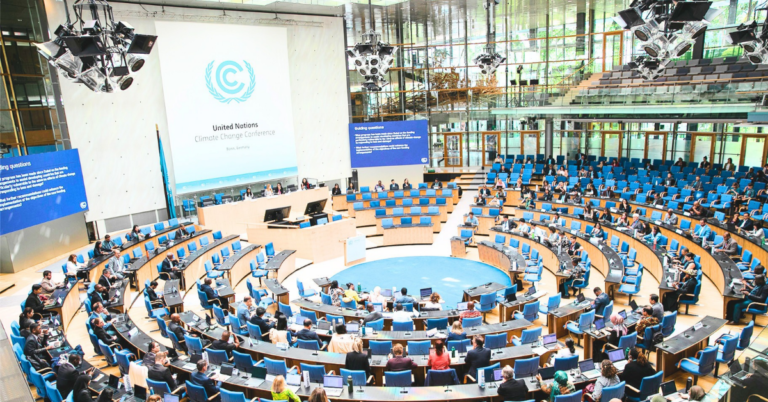
Global Eyes on Belém as COP30 Seeks Climate Solutions
As the world converges on Belém, Brazil, for COP30, the stakes could scarcely be higher. The summit arrives at a critical moment because scientific evidence shows a narrowing window to prevent catastrophic warming, political will appears fragile, and policy contradictions are widespread. Brazil, as host, embodies both promise and paradox.
The Amazon is central to global climate stability, yet structural and systemic challenges complicate the international expectations placed on the country.
Brazil’s selection as host carries symbolic weight. The Amazon, often described as the planet’s lungs, plays a crucial role in regulating global climate systems.
Read More: Global Methane Pledge Gains Momentum Ahead Of COP30
In his opening address, President Luiz Inácio Lula da Silva called this a “COP of truth,” emphasizing science, solidarity, and urgency. Commitments, he stressed, must translate into measurable action. Yet beneath the rhetoric lies ambivalence.
While Brazil has reduced Amazon deforestation and launched the Tropical Forest Forever Facility to mobilize forest finance, its climate plan relies heavily on deforestation reductions rather than structural transformations in agriculture, energy, transport, and industry. Expanding oil exploration and extractive activities near the Amazon further complicates the narrative.
COP30’s focus is shifting from promises to delivery. Past commitments on phasing down unabated fossil fuels, scaling finance for adaptation and loss and damage, and mobilizing investment for mitigation remain largely unfulfilled. The science is clear. Critical tipping points are near or have already been crossed. The pressing question is not what the world will promise but what it will deliver and when.
Finance remains a major point of contention. Developing countries are pressing developed nations and international financial institutions to honor longstanding commitments, while initiatives such as Brazil’s Tropical Forests Forever Facility (TFFF) signal a shift toward results-based payments for forest conservation. Current financial flows remain insufficient, especially for adaptation and loss and damage. Equitable participation is also challenged because logistical constraints, rising costs, and limited lodging in Belém are restricting access for smaller delegations and civil society groups, threatening the summit’s credibility.
The host-city infrastructure highlights further contradictions. Projects undertaken for COP30, including a new highway in the Amazon, have drawn criticism for deforesting sensitive areas. These tensions raise questions about whether climate summits can align practical planning with stated environmental objectives.
The path ahead is stark but navigable. High-ambition targets must be paired with concrete timelines, sectoral planning, and measurable progress. Finance must not only increase but also be restructured to prioritize adaptation, forests, and loss and damage, with greater agency for the Global South. Credibility demands coherence. Fossil fuel expansion cannot be reconciled with forest conservation without undermining trust and multilateral cooperation.
COP30 is a defining moment. Treated merely as symbolic, it risks stalling global momentum. If it produces an actionable roadmap that integrates forest preservation, just transitions, financing, and accountability, it could recalibrate multilateral climate governance at a time when the world can least afford delays. The eyes of the world are not just on the pledges emerging from Belém but on whether they will be delivered.