Dynamics of dual climate economy in Pakistan
Pakistan stands at a crossroads of climate vulnerability and opportunity, where adapting a dual climate economy such as green and blue can transform its development trajectory. This model focuses on the sustainable and transformative management of terrestrial and marine resources simultaneously.
The green economy emphasizes land-based sustainability by promoting agriculture, renewable energy, forestry, waste management, and industry. In contrast the blue economy harness the sustainable use of marine and aquatic resources such as fisheries, ports, shipping, tourism, and offshore energy. Together, they create a comprehensive framework where land and sea in harmony to build a resilience and promote economic diversification.
The green economy holds enormous potential for enhancing climate resilience. As an agrarian country, Pakistan stands to gain greatly from sustainable farming practices like drip irrigation, drought-resistant crops, and precision agriculture which help conserve water and enhance productivity. Forestation efforts such as the Upscale Green Pakistan Programme demonstrates how large-scale ecological restoration can counter deforestation and mitigate climate change. The energy sector also shows great potential as Pakistan’s solar capacity is estimated at 2.9 million MW annually, while its wind corridors could generate over 50,000 MW if utilized effectively. Shifting to these renewable sources can reduce dependance on imported fossil fuels, lower emissions, and create employment opportunities. In addition Urban centers are facing challenges of waste and pollution, could also benefit from recycling initiatives and green industries. However, progress remains hindered by inconsistent policies, weak enforcement of environmental laws and the high upfront costs of renewable technologies.
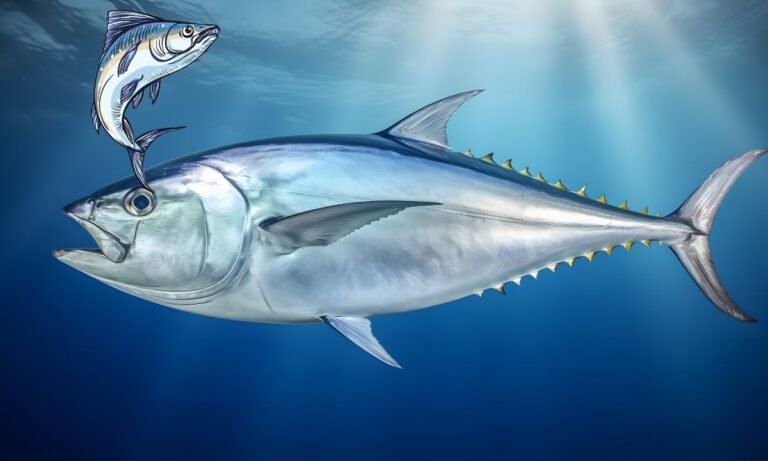
In parallel, the blue economy offers strategic promise, based on 1,000-kilometer coastline along the Arabian Sea. Gwadar Port, the focal point of the China-Pakistan Economic Corridor (CPEC), has a potential to become an important global trade hub, linking with the regional markets to Africa, the Middle East, and beyond.
One of the busiest shipping routes, the Arabian Sea provides Pakistan with a natural advantage as a maritime gateway. However, its fisheries sector, supporting nearly 4 million livelihoods, contributes under 1% to GDP emphasizing significant underutilization. There is a promising potential in deep-sea fishing, aquaculture, and coastal tourism in areas like Gwadar, Ormara, and Sonmiani.
If supported by sustainable infrastructure, Maritime trade could turn Pakistan into a major logistics center. However, challenges such as overfishing, marine pollution, poor governance, and inadequate coastal infrastructure have restricted progress, undermining a sector valued at over $100 billion in unutilized potential.
Compared to the green economy, which has a broader national reach involving both rural and urban communities, the blue economy is more geographically concentrated yet strategically important. The green economy has the potential to generate about $2 billion annually from renewable energy, carbon credits, reforestation, and sustainable farming. Currently, the blue economy contributes approximately $1 billion annually, but if fully taped, it could double that amount. These figures highlight that while the green economy already delivering tangible progress, the blue economy remains a vast, largely underperforming opportunity.
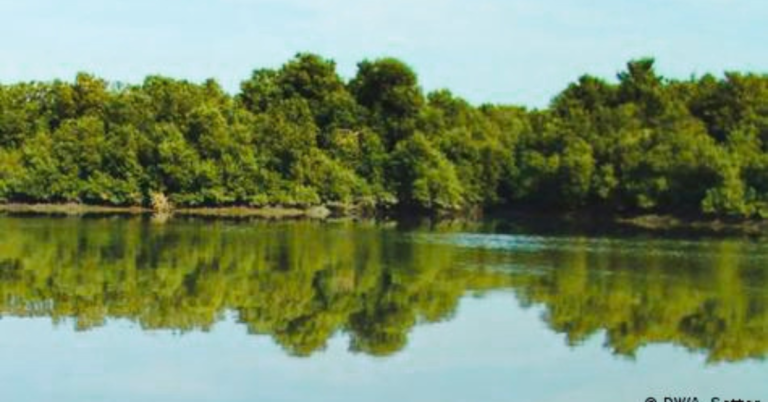
Importantly, the two are fundamentally interlinked. Agricultural runoff, industrial effluents, and plastic waste flow into rivers and coastal waters, illustrating how unsustainable land practices directly damage marine ecosystems. At the same time, offshore wind and tidal energy projects represent convergence of green and blue strategies. Mangrove restoration in the Indus Delta, where the area has shrunk from 600,000 hectares to less than half, is a perfect illustration of this synergy. Restored mangroves shield coastal communities from cyclones, capture carbon, and sustain fisheries, combining ecological recovery with economic benefits.
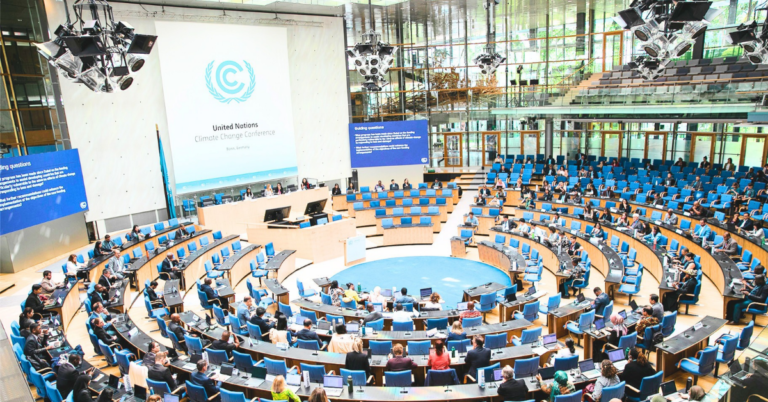
Significant hurdles still persist despite this commitment as the adaptation needs of Pakistan exceed $14 billion per year, yet climate financing inflows are less than $1 billion. Fragmented policies between federal and provincial governments mostly slow down development of projects, while poverty and social vulnerabilities reduce the communities’ capacity to adapt. Continued dependance on fossil fuels and poor regulation against overfishing further undermine progress. Bridging these gaps demands strong political resolve, coordinated governance, and international partnerships.
Realizing the full potential of a dual climate economy seeks integrated policies that harmonize land and sea priorities. Tools like green and blue bonds can help attract investment. Research needs to focus on water-efficient agriculture, aquaculture, and offshore renewable energy, while education and incentives must empower local populations particularly women and youth to engage in climate-smart projects.
Regionally, ports could be developed as sustainable trade hub, enhancing connectivity while protecting ecosystems. However, Pakistan is modernizing its ports’ infrastructure. The government promotes digitalization, AI-powered operations to cut container dwell time by 70%. Green port efforts and private sector collaboration are prioritised to improve trade and governance efficiency.
The dual climate economy offers a complex paradox despite country is facing some of the world’s severe climate risks, Although it holds vast potential for sustainable development. The green economy presents pathways to secure food, water, and energy resilience, while the blue economy can derive growth via maritime trade, fisheries, and coastal tourism. Together, these sector provide the foundation for a climate-resilient growth strategy. Pursuing this dual economy model is not an optional but essential for Pakistan. However, with aligned policies, innovative financing, and inclusive governance, the country can turn its climate challenges into opportunities, building a green and blue future.