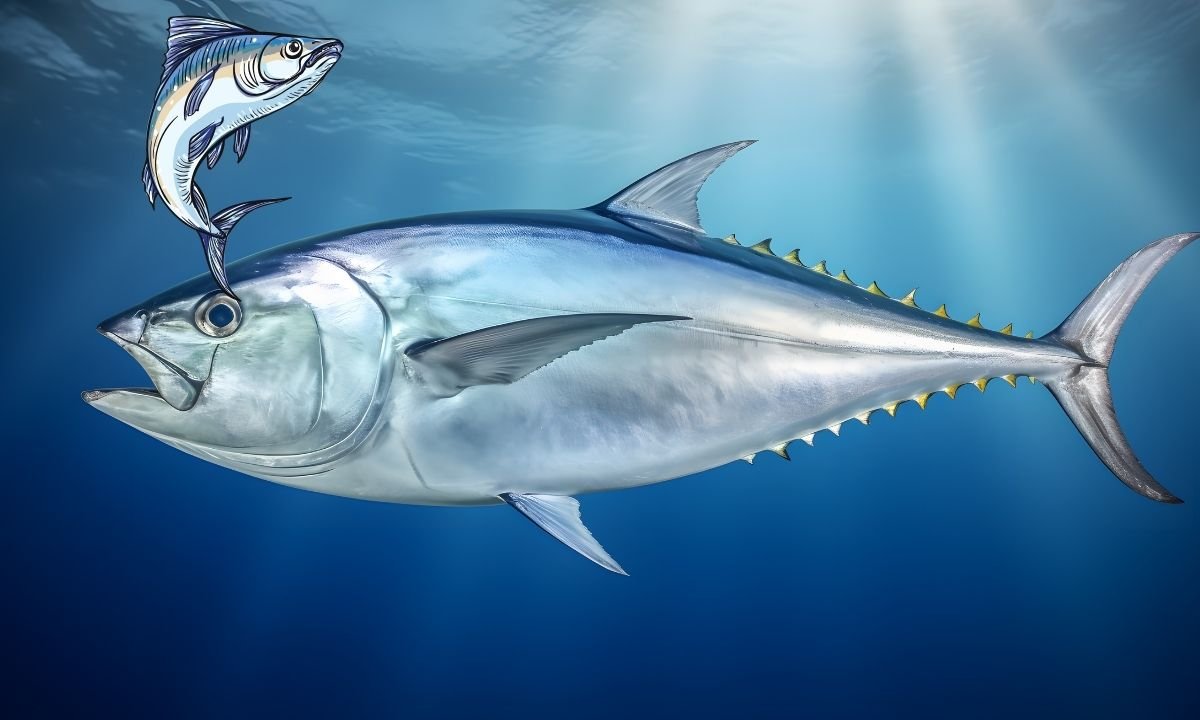
Climatic impact on tuna migration
Since the early 1990s, Pakistan’s tuna fishery has been dominated by Yellowfin and Skipjack, but both the species are highly prone to migration because of environmental factors such as rising sea temperatures. Mostly they migrate to eastward and deeper waters, altering the traditional fishing routes. This migration directly affects the livelihoods of fishermen in Balochistan and Sindh, who generally report decline in nearshore catches, forcing longer trips and higher fuel costs. The only solution is the provision of localized adaptation support to save their livelihood.
As climate change is mainly disturbing the overall ecosystems, global marine ecosystems are also the worst hit causing a major shift in the fish migration routes. With this, the increasing demand for responsibly sourced seafood is also bringing about worldwide change in marine trade patterns. These patterns also lead to long-range movements across oceans to neighbouring countries.
Indian Ocean tuna is known for extensive, often rapid migrations driven by biological factors like feeding and spawning, environmental influences, and ocean currents. These species have specific distribution hotspots and show some seasonal movements in certain regions.
Currently, Pakistan harvests over 45,000 tons of tuna annually. However, a significant portion of this valuable resource is lost due to fragmented regulation, lack of oversight, and informal trade channels. To address these challenges, Pakistan was recently granted an official quota of 25,000 metric tons comprising 15,000 tons of Yellowfin Tuna and 10,000 tons of Skipjack Tuna under the Indian Ocean Tuna Commission (IOTC) framework. This quota aligns with climate-friendly fishery management principles aimed at conserving marine biodiversity and reducing pressure on ecosystems.
Pakistan is engaging with IOTC member states to share data on transboundary tuna stocks and improve regional fishery governance. Pakistan’s commitment to sustainable exploitation within its Exclusive Economic Zone (EEZ) in the Arabian Sea reflects international agreements on conservation and resource optimization. With international prices for these fish ranging from $5 to $7 per kilogram, higher with value-added processing, the formalization of Pakistan’s tuna industry through regulated quotas has the potential to generate up to $200 million in export revenue, revitalize coastal communities, and position the country as a responsible leader in the ocean economy.
To further this transformation, the government introduced the National Fisheries and Aquaculture Policy to integrate regulatory frameworks, enforce catch limits, and ensure climate-aligned fishing practices. Environmentally destructive methods such as gillnetting and bottom trawling, which are criticized for their low selectivity and environmental harm, are being phased out in favour of more sustainable techniques like longlining and pole-and-line fishing with bycatch mitigation measures.
Gillnetting, still widely used by Pakistani fishermen, is problematic because the slow capture and retrieval process, especially in warm waters like those off Pakistan, allows histamine-producing bacteria more time to act on tuna muscle histidine. This results in elevated histamine levels, posing food safety risks such as scombroid poisoning. Despite these concerns, fishermen are often reluctant to adopt new methods due to cultural habits and market disincentives; gillnet fishing has been a tradition for generations, creating resistance to change even when alternatives are more efficient and sustainable.
The adoption of longlining can enhance the market value of tuna and offers several advantages: it significantly reduces bycatch of vulnerable species such as marine mammals, sea turtles, and sharks, which are associated with ecological, legal, and trade concerns.
To support this transition, the Food and Agriculture Organization (FAO) is providing demonstration longline kits to coastal communities, promoting sustainable fishing practices.
Improving seafood infrastructure is another key component of Pakistan’s tuna sector reform. The Korangi Fisheries Harbour is undergoing revitalization with new facilities such as a modern auction hall and a floating jetty. These upgrades will enhance tuna landings, improve traceability, and help meet stringent European Union import standards.
Pakistan’s Tuna sector is on the cusp of a transformative leap. With secured quotas, ongoing reforms, global partnerships, and upgraded infrastructure, the industry is poised to generate significant export earnings, empower coastal communities, and uphold sustainable marine resource management in the face of climate change.
Together, improved infrastructure, sustainable fishing practices, and policy reforms mark a cultural shift in Pakistan’s tuna catch — aligning economic growth with ecological responsibility in a climate-torn world.