Global Methane Pledge Gains Momentum Ahead Of COP30
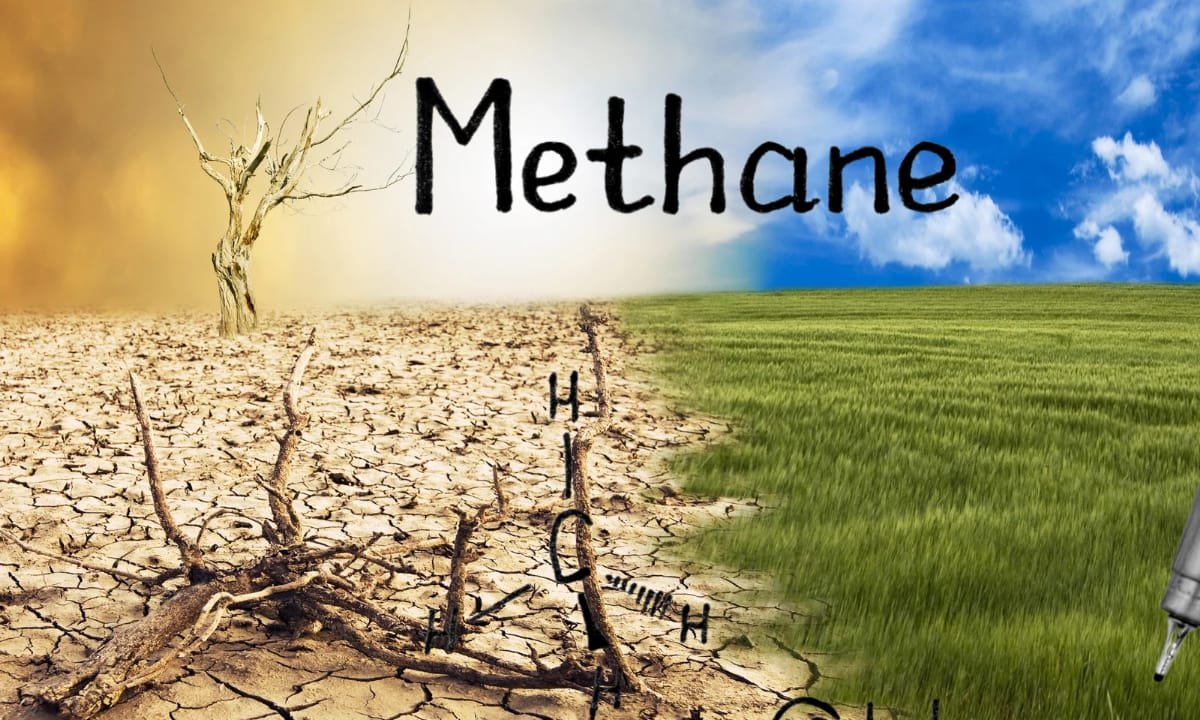
Methane is extremely powerful greenhouse gas that traps heat over 80 times more effectively than carbon dioxide in the short term. Despite remaining in the atmosphere for only about a decade, it currently accounts for nearly one-third of global warming. Therefore, rapidly reducing methane emmissions is one of the quickest and most affordable ways to slow climate change.
Human activities like fossil fuel extraction, livestock farming, rice cultivation, and inadequate waste management are responsible for the bulk of current emissions. Additionally, methane contributes to ground-level ozone formation, which degrades air quality and damaging crop productivity.
Recognizing its outsized impact, global attention has increasingly turned toward methane abatement. The Global Methane Pledge (GMP), launched by the European Union and the United States at COP26 and now endorsed by 159 countries, commits participants to cut global methane emissions by 30% from 2020 levels by 2030. The initiative focuses on high-emission sectors including energy, agriculture, and waste, while strengthening monitoring, reporting, and financial mechanisms to support implementation, particularly in developing economies.
Read More: Fighting climate misinformation
For Pakistan, joining the GMP presents an opportunity to integrate climate action with sustainable economic deveolpment. By accessing international climate finance and technology transfer, Pakistan can reduce emissions while simultaneously promoting food security, public health, and renewable energy goals. Incorporating methane mitigation into policies will be essential for meeting climate targets and strengthening resilience to global warming.
Pakistan currently ranks as the world’s seventh-largest methane emitter, with emissions doubling since 1990 to about 234.5 million metric tons of CO₂ equivalent in 2022 and growing at roughly 2% annually. Agriculture and landfills are the dominant contributors. In the agricultural sector, livestock and rice cultivation generate most of Pakistan’s methane emissions. Feed quality improvements and additives such as tannins, essential oils, and probiotics can reduce methane from enteric fermentation, while better herd management, selective breeding, and manure handling including biogas recovery systems further enhance mitigation and productivity.
In rice farming, adopting alternate wetting and drying (AWD) irrigation can lower methane emissions by up to 70% and water use by about 30%. Other sustainable methods, including direct-seeded rice (DSR) and controlled irrigation, help reduce flooded conditions that generate methane. As rice sustains half of the global population and supports millions of smallholder farmers, sustainable cultivation is vital. With global rice demand projected to rise by 30% by 2050, the sector must evolve to meet both food security and climate goals.
Waste management reform offers another major avenue for methane reduction. Modern sanitary landfills with methane capture systems like the Lakhodair Landfill in Lahore, demonstrate how emissions can be reduced while generating renewable energy. Expanding waste segregation, composting, and recycling, alongside stronger institutional and monitoring frameworks, can further reduce methane from open dumps and uncontrolled disposal.
Regionally, India accounts for about 80% of South Asia’s methane emissions, followed by Pakistan with around 10%. Along with other high-emitting economies in Southeast Asia, Africa, and Latin America, these countries represent the majority of methane emissions from the Global South, regions where agricultural dependence and rapid urbanization drive rising methane output.
Methane reduction remains central to international climate policy. At COP30 in Brazil, methane abatement featured prominently in discussions on implementing the Paris Agreement’s Global Stocktake, with agricultural transformation and resilience identified as key priorities. Partnerships under the Global Methane Pledge are expected to accelerate emission cuts, particularly through technology collaboration and capacity building.
Momentum continued during the 80th United Nations General Assembly (UNGA80), where leaders at Climate Week NYC and the Climate Summit unveiled stronger Nationally Determined Contributions (NDCs) and methane-specific actions. China pledged to reduce peak GHG emissions by 7–10% by 2035; the EU announced a €300 billion clean energy investment package; Brazil enhanced its deforestation and climate targets; Nigeria committed to cross-sector decarbonization; and Belize launched an ambitious renewable energy–focused NDC. The Global Energy Alliance for People and Planet also committed $1.6 billion to electrify 300 million Africans by 2030.
These developments underscore growing global resolve to address methane emissions as a priority climate strategy. For Pakistan and other developing nations, implementing effective methane mitigation policies under the Global Methane Pledge offers a practical path to deliver major climate, health, and economic benefits while strengthening national sustainability and resilience in the decade ahead.