Climate-Vulnerable Nations Advance $500m Lifeline Fund
BANGKOK, Thailand, Oct 14: Six climate-vulnerable countries have endorsed a proposed $500 million Lifeline Fund designed to provide rapid financial support when climate-related disasters put pressure on national reserves and external payments.
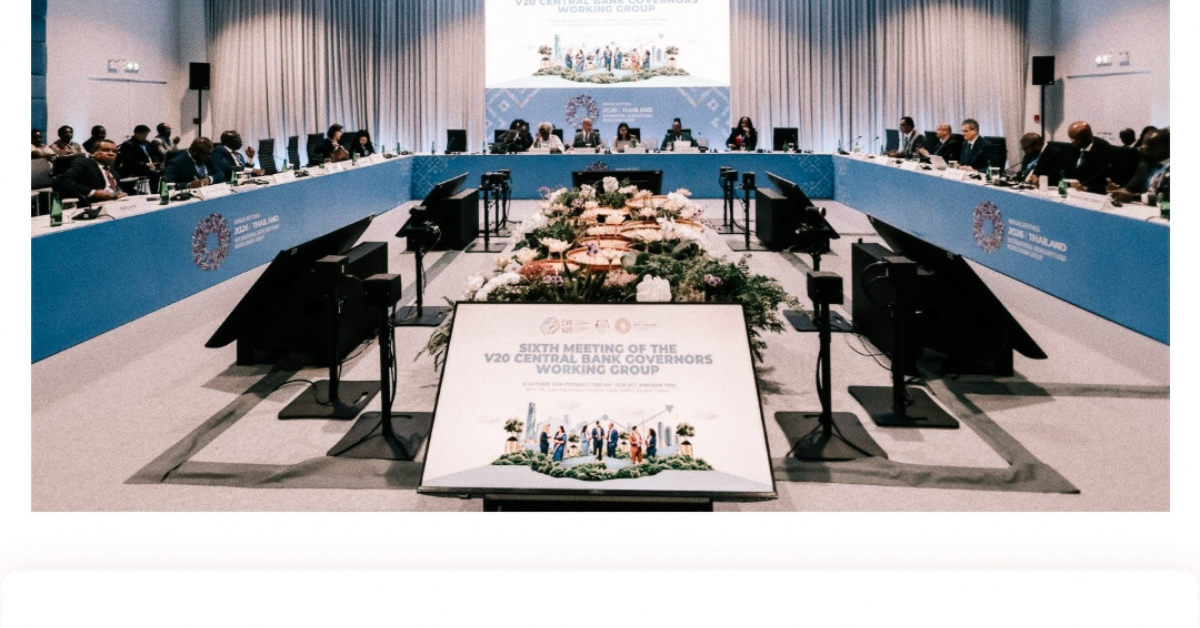
Barbados, Bhutan, The Gambia, Ghana, Guyana and Papua New Guinea signed a non-binding Statement of Endorsement at the Sixth Meeting of the V20 Central Bank Governors Working Group, held during the 2026 Annual Meetings of the World Bank Group and International Monetary Fund in Bangkok.
The statement signals interest in establishing the Fund but does not commit the signatories to membership or require them to contribute financial resources. Other countries have also expressed support, subject to their domestic approval processes.
The proposed Fund aims to address a gap in the Global Financial Safety Net (GFSN), the network of international and regional institutions and arrangements that provides financial assistance to countries facing economic crises. Climate-related disasters can disrupt economic activity, reduce export earnings and increase import requirements, putting pressure on foreign exchange reserves and balance-of-payments positions.
The V20 initiative seeks to establish a dedicated mechanism to help vulnerable economies manage these immediate financial pressures. Existing arrangements, according to the V20 Working Group, do not consistently provide climate-vulnerable countries with rapid, predictable liquidity following climate shocks.
Access to currency swaps and regional financial arrangements is uneven, while existing International Monetary Fund instruments have limitations in scale, availability or suitability for immediate post-disaster needs. The proposed Lifeline Fund would serve countries across the Caribbean, Africa, Asia, Latin America and the Pacific.
Its design has been developed through consultations with V20 central banks, technical meetings, stress testing and bilateral engagement. At the Climate Vulnerable Forum (CVF) Leaders’ Meeting in September 2026, leaders welcomed progress and called for the remaining technical, legal and institutional work needed to establish the Fund to be completed.
Proposed Lending Facilities
The Fund’s design includes two lending facilities. The Rapid Resilience Facility would provide short-term liquidity following a qualifying climate-related event, with loans carrying maturities of one to three years. The Stabilisation Credit Facility would support medium-term balance-of-payments adjustment following climate shocks, with maturities of three to five years.
Based on initial capitalisation plans and stress-testing results, the Fund is expected to begin operations with the Rapid Resilience Facility. The second facility would be introduced as the Fund’s capital base and lending capacity expand, subject to governance approvals. The initial capitalisation target is $500 million, with a longer-term pathway to at least $1.6 billion as membership and partner participation increase.
For planning purposes, indicative member contributions have been estimated at the equivalent of 0.2 per cent of international reserves. Actual subscriptions would remain subject to domestic approval. The proposed capital structure could also be strengthened through additional contributions from members and partners, investment income retained by the Fund and potential borrowing from international capital markets, subject to governance decisions and appropriate financial safeguards.
Climate Risks, Stability
The initiative comes amid growing concern about the economic consequences of climate-related shocks in vulnerable countries. The Working Group highlighted the potential for a strengthening El Niño, expected to persist into 2027, to disrupt economic activity and place pressure on external balances and financial reserves.
Papua New Guinea, which has accessed the IMF’s Resilience and Sustainability Facility, highlighted the need for financial instruments capable of responding to immediate pressures on international reserves and foreign exchange markets following climate shocks.
Chairing the meeting, Dr Kevin Greenidge, Governor of the Central Bank of Barbados and Chair of the V20 Central Bank Governors Working Group, said vulnerable economies needed financial support that could be mobilised at the speed required by a climate emergency.
“When a climate shock creates sudden balance-of-payments and liquidity pressures, climate-vulnerable economies should have access to financial support that arrives at the speed the shock requires,” Greenidge said. He said the initiative was intended to help countries build a financial safety net tailored to the economic pressures they face following climate-related disasters.
Future Steps
The Working Group will complete the remaining technical and legal work on the draft governing instrument, including issues relating to reserve-asset treatment, access arrangements, pricing and financial risk management. The objective is to prepare the founding instrument for signature by the 2027 Spring Meetings of the World Bank Group and IMF.
The Fund would enter into force and hold its first Board of Governors meeting after the conditions specified in the founding treaty have been met.Preparations will also cover interim reserve-management arrangements, host-country agreements, transitional governance and the competitive selection of a permanent executive director.If established as proposed, the Lifeline Fund would create a dedicated multi-regional mechanism within the global financial safety net to help climate-vulnerable countries respond to the immediate financial consequences of climate shocks.