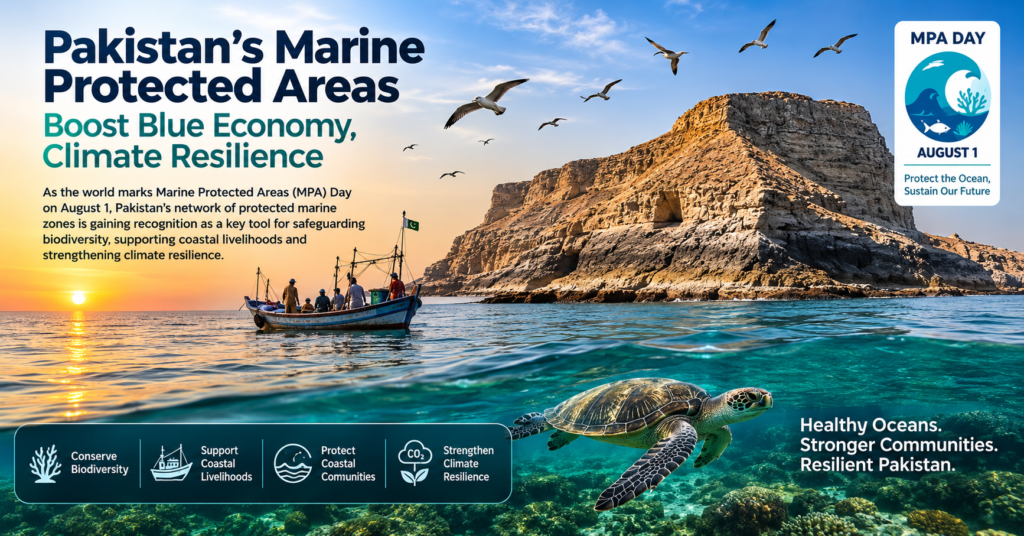
Pakistan’s Marine Protected Areas Boost Blue Economy, Climate Resilience
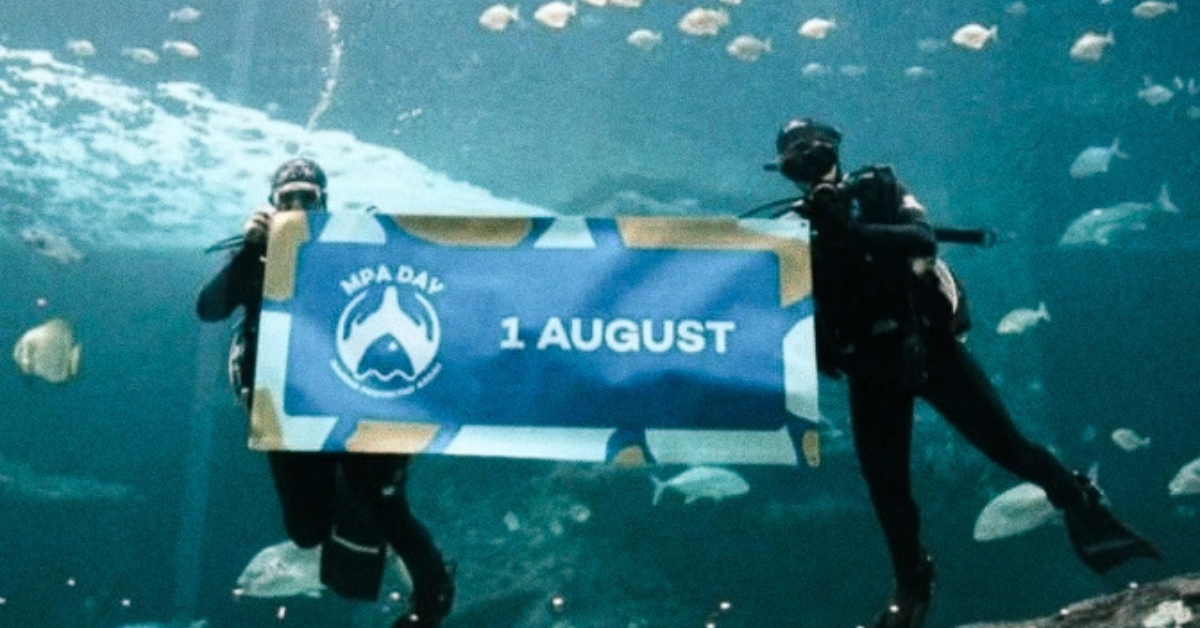
As the world marks Marine Protected Areas (MPA) Day on Saturday, Pakistan’s network of protected marine zones is gaining recognition as a key tool for safeguarding biodiversity, supporting coastal livelihoods and strengthening climate resilience.
Observed annually on August 1, MPA Day is a global campaign dedicated to raising awareness about Marine Protected Areas (MPAs) often described as the “national parks of the sea” and their role in conserving marine ecosystems while promoting sustainable economic development.
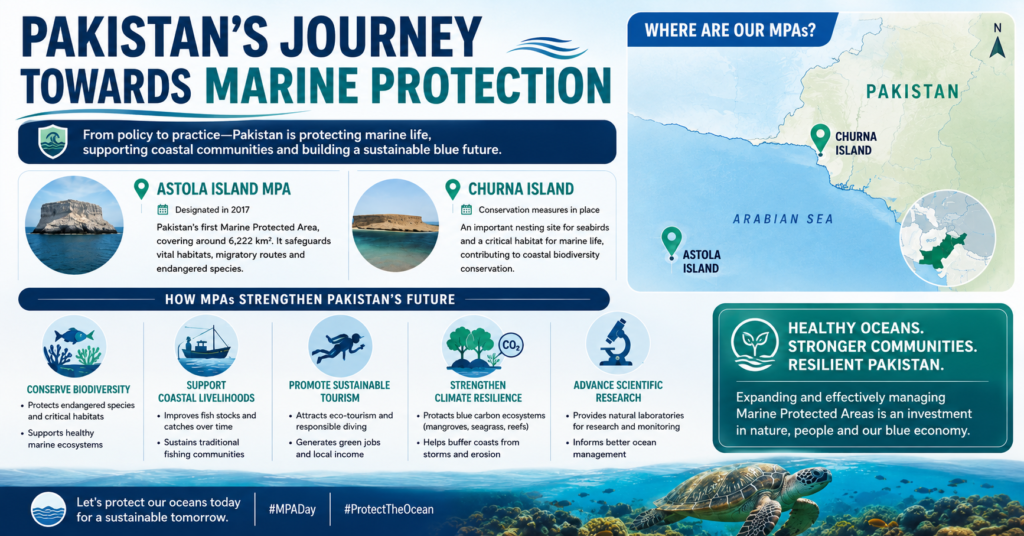
In Pakistan, the concept has moved steadily from policy discussions to practical conservation efforts. The designation of Astola Island as the country’s first Marine Protected Area in 2017, followed by conservation measures at Churna Island, reflects a broader commitment to protecting marine ecosystems while advancing the country’s blue economy agenda.
Marine Protected Areas are designated sections of the ocean managed to conserve biodiversity, habitats and ecosystem services. Rather than imposing blanket restrictions, they typically combine core no-take zones with buffer and multiple-use areas where sustainable fishing, tourism and scientific research can continue under regulated conditions.
Off Coast Of Balochistan
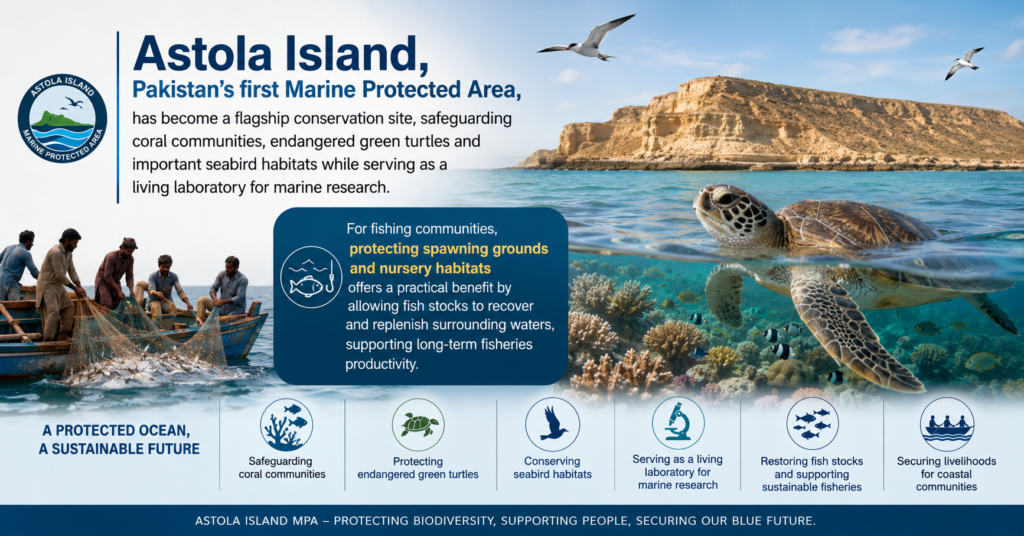
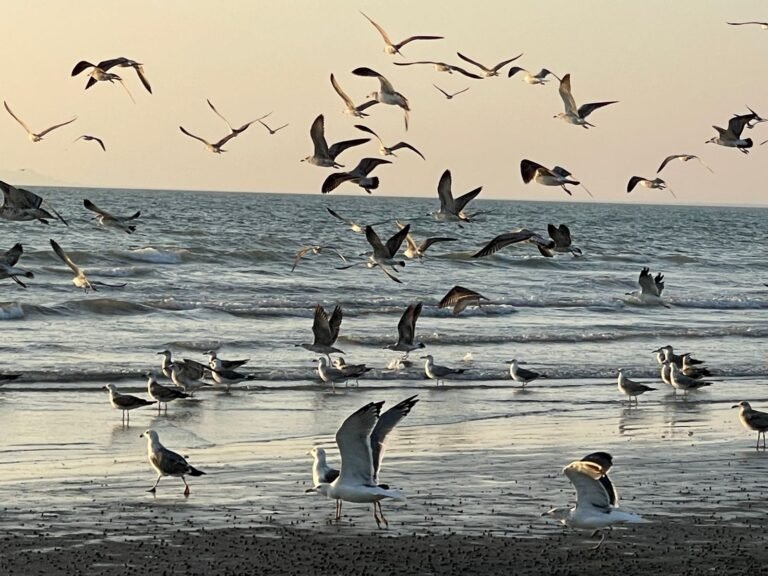
Astola Island, Pakistan’s first Marine Protected Area, has become a flagship conservation site, safeguarding coral communities, endangered green turtles and important seabird habitats while serving as a living laboratory for marine research.
For fishing communities, protecting spawning grounds and nursery habitats offers a practical benefit by allowing fish stocks to recover and replenish surrounding waters, supporting long-term fisheries productivity.
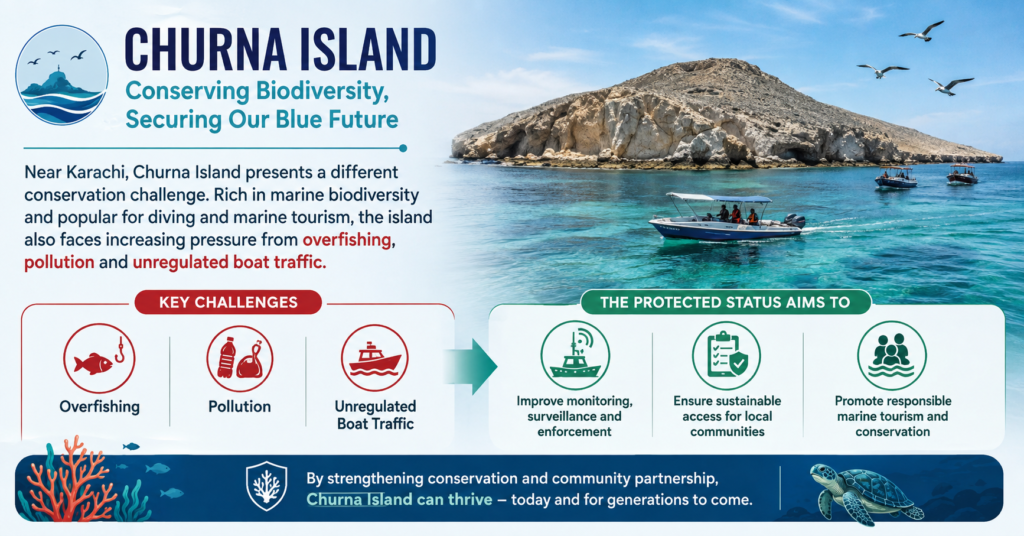
Near Karachi, Churna Island presents a different conservation challenge. Rich in marine biodiversity and popular for diving and marine tourism, the island also faces increasing pressure from overfishing, pollution and unregulated boat traffic. Its protected status aims to improve management through better monitoring, surveillance and enforcement while ensuring sustainable access for local communities.
Supporting Blue Economy
Pakistan’s nearly 1,000-kilometre coastline offers significant opportunities in fisheries, seafood processing, maritime transport, tourism and renewable energy. However, many coastal communities continue to face limited economic opportunities, while marine spatial planning and institutional capacity remain underdeveloped.
Experts say Marine Protected Areas can help bridge these gaps by linking habitat conservation with sustainable fisheries, food security, climate adaptation and alternative livelihoods.
Pakistan’s marine conservation efforts also support Sustainable Development Goal 14 (Life Below Water) and contribute to the global 30×30 target, which seeks to protect at least 30 per cent of the world’s land and oceans by 2030 under the Kunming-Montreal Global Biodiversity Framework.
Communities Remain Central
Conservation specialists stress that the success of Marine Protected Areas depends on meaningful participation by coastal communities.Involving artisanal fishers in planning, recognising traditional ecological knowledge and monitoring both ecological and socio-economic outcomes can improve compliance while ensuring conservation delivers tangible local benefits.
Public awareness is also considered essential. Improving ocean literacy helps communities understand why seasonal fishing closures, no-take zones and habitat protection ultimately contribute to healthier fisheries and more secure livelihoods.
Enforcement, Data Key To Success
Experts note that declaring protected areas is only the first step. Effective management requires trained personnel, patrol vessels, surveillance systems and coordination among federal and provincial agencies to curb illegal, unreported and unregulated fishing.
Regular ecological surveys, fish stock assessments and socio-economic monitoring are equally important to evaluate whether conservation measures are achieving their objectives and to adapt management strategies where necessary.
Nature-Based Climate Solution
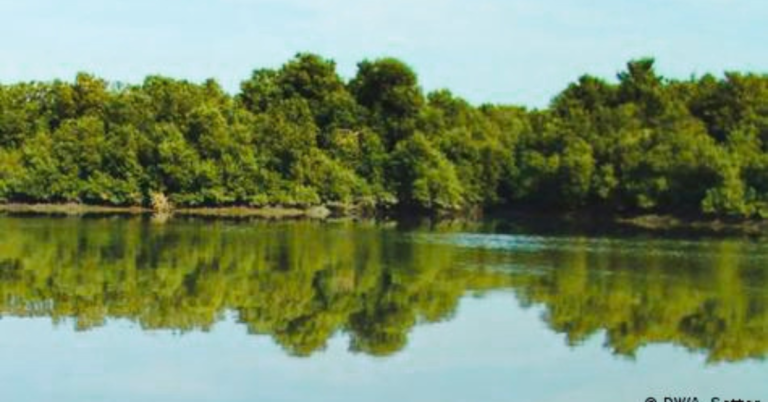
Marine Protected Areas are increasingly being recognised as part of Pakistan’s climate adaptation strategy. Healthy mangrove forests, sea grass beds and coral reefs reduce coastal erosion, buffer storm surges and provide habitat for marine species.
These ecosystems also store significant amounts of carbon, making them valuable for both climate mitigation and adaptation.
As Pakistan expands its marine conservation network, policymakers view protected areas not simply as conservation zones but as long-term investments in biodiversity, sustainable fisheries, resilient coastal communities and a stronger blue economy.