World Habitat Day Highlights Islamabad’s Natural Ecosystems

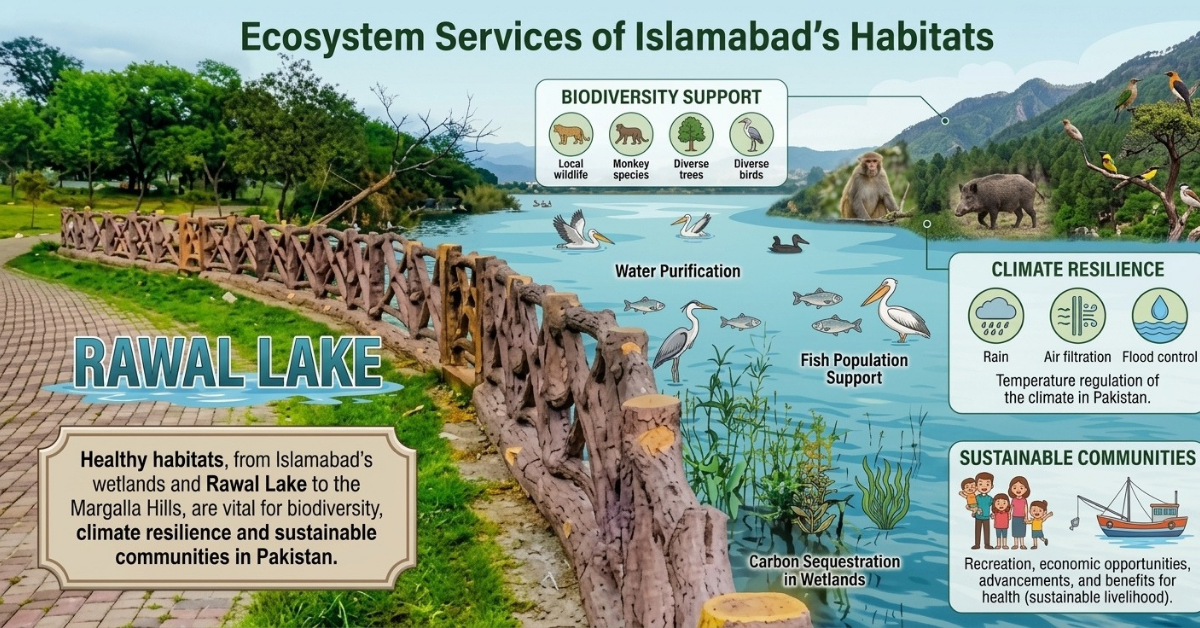
World Habitat Day reminds us that healthy habitats are essential for healthy communities and a resilient future. In Pakistan, rapid urbanisation, pollution, deforestation, water scarcity and climate change are placing growing pressure on both natural and human habitats.
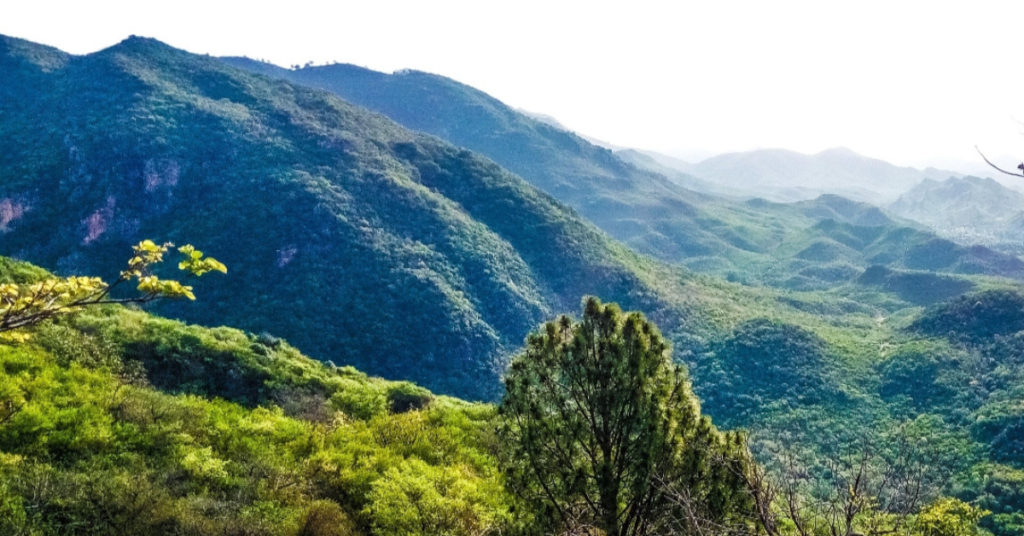
From the wetlands of Islamabad and the waters of Rawal Lake to the forests of the Margalla Hills, these ecosystems support diverse wildlife, regulate water and climate, and provide vital spaces for people.
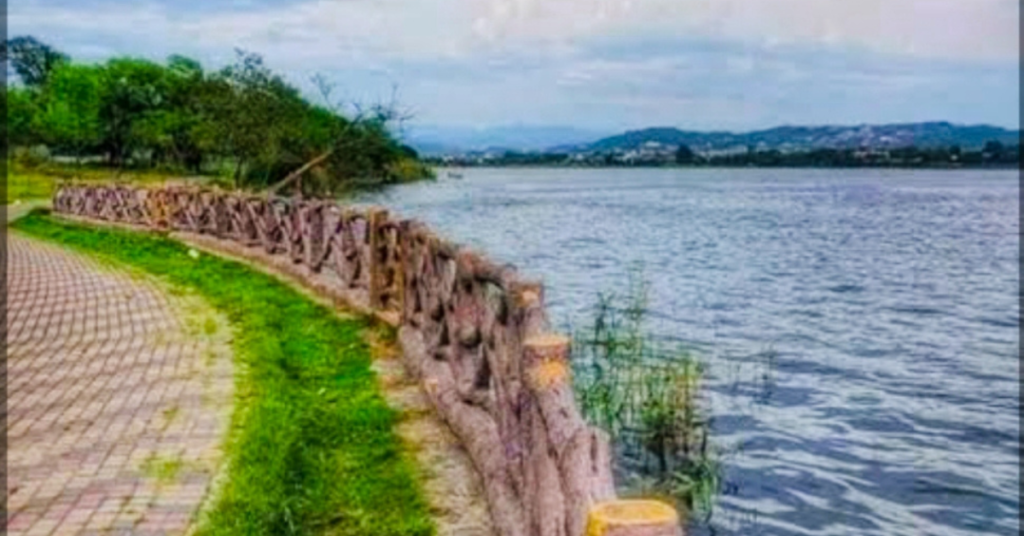
Protecting them is essential not only for biodiversity but also for building climate-resilient and sustainable communities across Pakistan.
Similar Posts

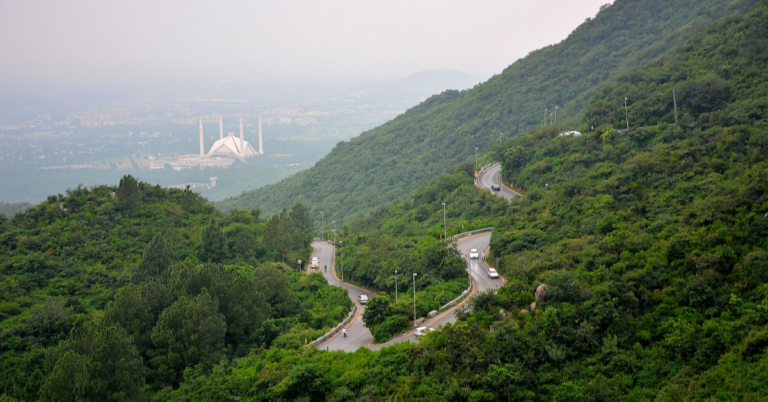
  • Margalla Hills Shield Islamabad From Climate Change, Extreme Heat

    As dawn breaks over the Margalla Hills, golden light spills across forested slopes that have long defined Islamabad’s skyline. Beneath towering pines, barbets, bulbuls, and laughing thrushes fill the morning air with birdsong, while beyond the hills, the city’s expanding roads and concrete neighborhoods awaken to the familiar rhythm of traffic. Read More: Climate change…

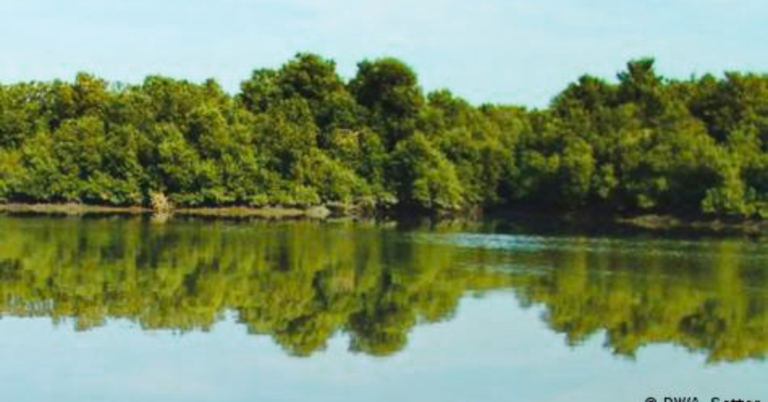
  • Pakistan’s Mangrove Restoration Builds Climate Resilience, Blue Economy

    Mangrove restoration in Pakistan’s Indus Delta is showing measurable gains, with project-area analysis recording a 33.64 per cent increase in mangrove cover between 2020 and 2025. The recovery underscores the role healthy coastal ecosystems can play in strengthening climate resilience, sustaining fisheries, storing blue carbon and creating opportunities in the blue economy. A natural coastal…

  • Climatic impact on tuna migration

    Since the early 1990s, Pakistan’s tuna fishery has been dominated by Yellowfin and Skipjack,  but both the species are highly prone to migration because of environmental factors such as rising sea temperatures. Mostly they migrate to eastward and deeper waters, altering the traditional fishing routes. This migration directly affects the livelihoods of fishermen in Balochistan…

  • Fighting climate misinformation 

    Information integrity on climate change is critical to overcoming denialism, greenwashing, and misinformation, which are major barriers to effective climate action and public engagement. Most countries in the Global South, including Pakistan, are significantly impacted by both climate misinformation and disinformation, which undermine public awareness, distort policy debates, and hinder effective responses to critical issues…

  • Global Eyes on Belém as COP30 Seeks Climate Solutions

    As the world converges on Belém, Brazil, for COP30, the stakes could scarcely be higher. The summit arrives at a critical moment because scientific evidence shows a narrowing window to prevent catastrophic warming, political will appears fragile, and policy contradictions are widespread. Brazil, as host, embodies both promise and paradox. The Amazon is central to…

  • Emerging role of Pakistan in the global carbon market

    Pakistan is steadily establishing itself as a key participant in the global carbon offset and trading market. With its largest forest reserves, extensive mangrove ecosystems, substantial untapped renewable energy resources, and an improving regulatory framework, the country has a great potential to harmonize environmental sustainability with economic growth. The shift mirrors a wider global trend…

Leave a Reply

Your email address will not be published. Required fields are marked *