Pakistan’s Mangrove Restoration Builds Climate Resilience, Blue Economy
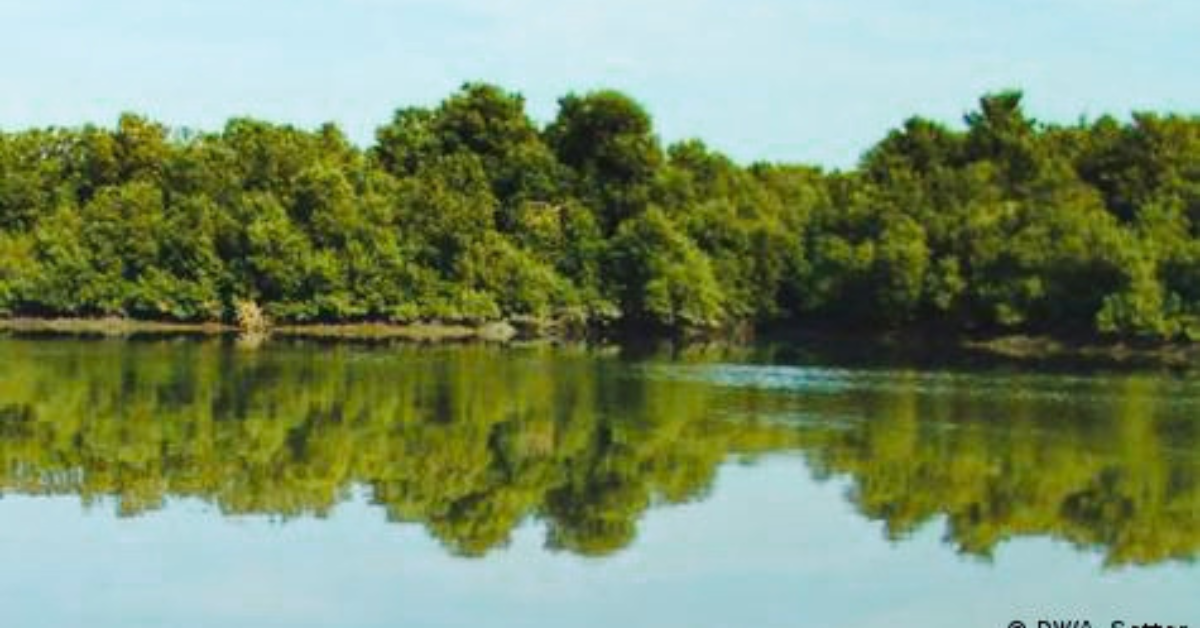
Mangrove restoration in Pakistan’s Indus Delta is showing measurable gains, with project-area analysis recording a 33.64 per cent increase in mangrove cover between 2020 and 2025. The recovery underscores the role healthy coastal ecosystems can play in strengthening climate resilience, sustaining fisheries, storing blue carbon and creating opportunities in the blue economy.
A natural coastal defence
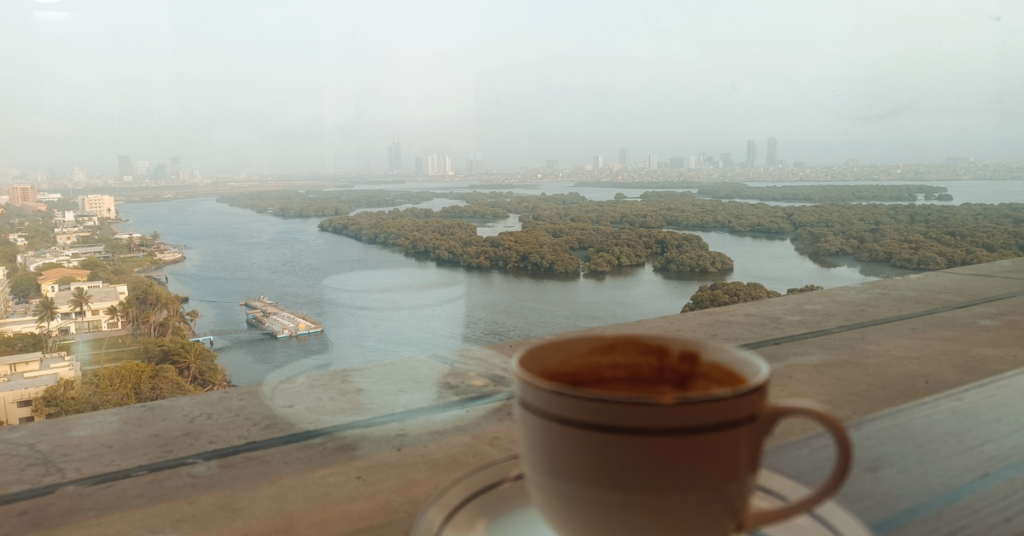
Mangrove forests form a natural barrier along the Arabian Sea coast, helping reduce erosion, flooding and the impact of storm surges while supporting fisheries, coastal livelihoods and marine biodiversity.
As the world marks the International Day for the Conservation of the Mangrove Ecosystem on July 26, Pakistan’s restoration efforts offer an example of how nature-based solutions can address climate risks, biodiversity loss and economic pressures at the same time.
Federal Minister for Maritime Affairs Muhammad Junaid Anwar Chaudhry said Pakistan was home to the world’s largest arid-climate mangrove forest, concentrated in the Indus Delta in Sindh, with smaller mangrove areas in Balochistan.
He said the country ranked around seventh globally in mangrove forest area and could potentially move to fourth or fifth place through sustained restoration. The challenge, however, is not simply to expand mangrove cover but to protect existing forests from the pressures that have contributed to their degradation.
Protecting Coastlines, Livelihoods
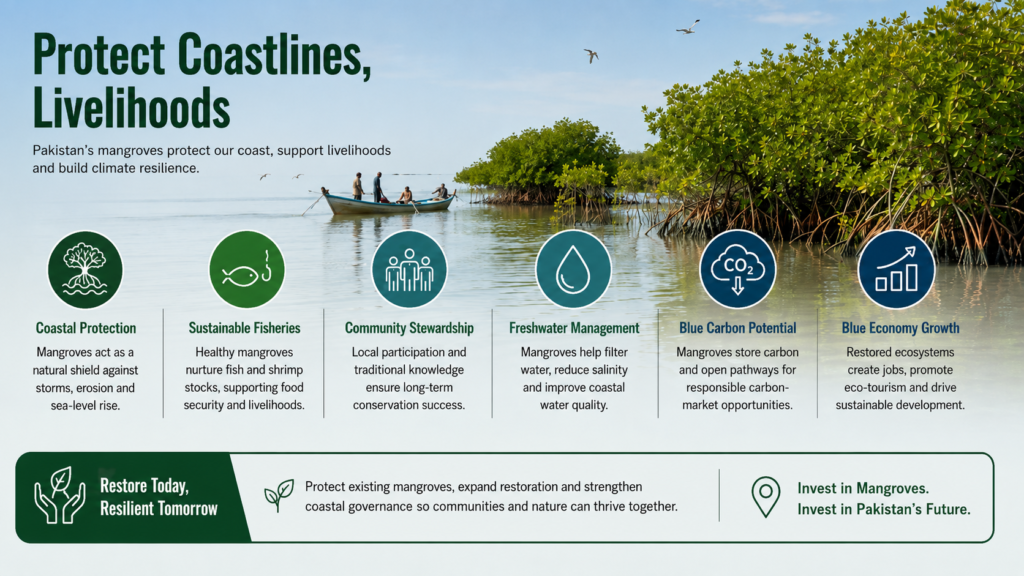
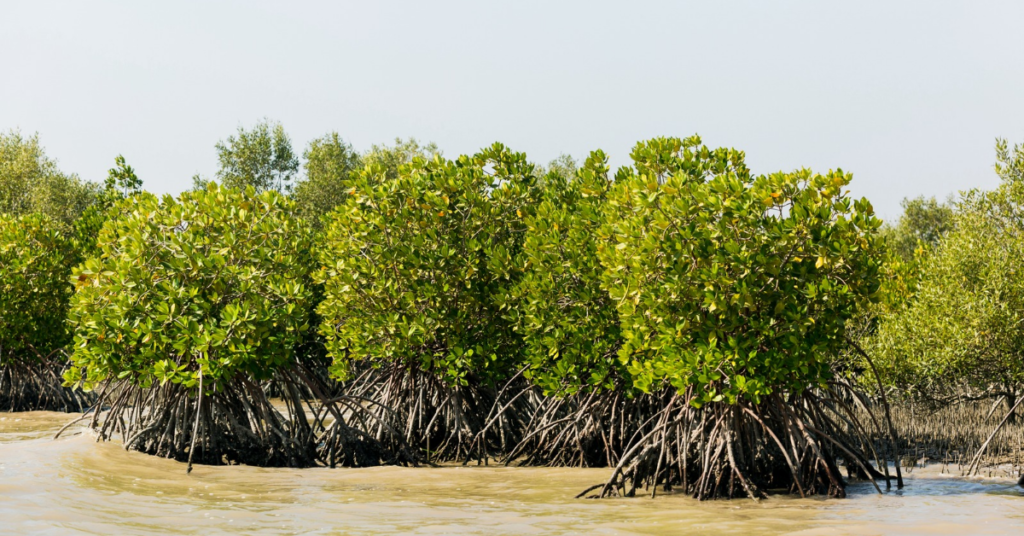
Mangroves’ extensive root systems help stabilise shorelines and reduce the effects of erosion, flooding and storm surges, providing a natural buffer for coastal communities, infrastructure and ports.Their value extends beyond coastal protection.
A study published in Frontiers in Marine Science on the northern Arabian Sea, including the Sindh coast, describes mangrove ecosystems as important breeding and nursery grounds for fishery resources, making them significant to coastal food security.
Research published in Environmental Development has also linked mangrove degradation to reduced capacity to support the livelihoods of coastal populations.
For Pakistan, where fisheries and aquaculture are increasingly regarded as important components of the blue economy, conserving mangrove habitats is therefore also an investment in future economic activity.
The blue-carbon opportunity
Mangroves are also important carbon sinks. The World Bank’s Pakistan Blue Carbon Rapid Assessment identifies mangroves among the most efficient natural systems for capturing and storing carbon in biomass and soils.
The Associated Press of Pakistan, quoting Junaid Chaudhry, reported that Pakistan’s mangrove carbon market could potentially generate an estimated $20 million to $50m annually, depending on carbon-credit prices and the volume of credits generated.
Balochistan’s approximately 4,058 hectares of mangroves could also contribute to national carbon-market initiatives.
According to UNESCO’s Intergovernmental Oceanographic Commission, scientific assessments indicate that blue-carbon ecosystems, including mangroves, can sequester two to four times more carbon than terrestrial forests.
For a country facing growing climate risks, the value of mangroves therefore extends beyond their ecological functions. Restoration can strengthen coastal resilience and biodiversity while potentially opening access to climate finance through carbon markets.
Restoration under pressure
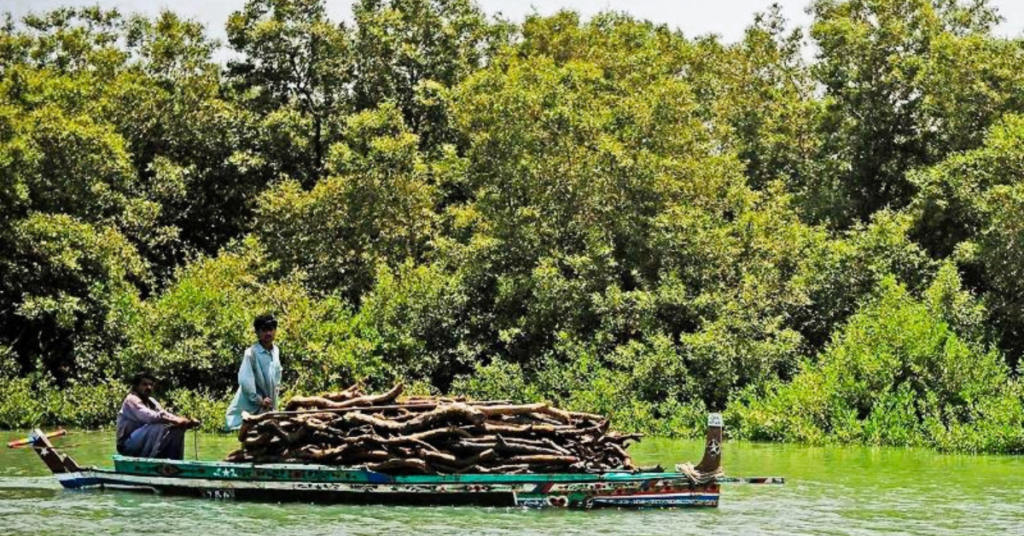
The gains, however, remain vulnerable to the factors driving mangrove degradation. An assessment by the International Union for Conservation of Nature (IUCN) Pakistan identifies reduced freshwater and silt supplies, pollution and conversion of mangrove areas to other land uses among the major threats facing the country’s mangrove ecosystems.
Along the Karachi coast, the Karachi Port Trust and provincial authorities have undertaken rehabilitation and conservation initiatives. KPT has recovered mangrove areas from encroachment, launched afforestation drives along Mai Kolachi Road and other coastal locations, and organised clean-up campaigns.
The port authority has also appointed environmental activist Almas Kasmani as its ambassador for coastal mangrove restoration. She has restored 4,000 mangrove plants and set a target of planting a further 100,000.
Such initiatives underline the need to combine restoration with enforcement against encroachment, public awareness and greater public-private investment in sustainable blue-economy activities.
Lessons from the Indus Delta
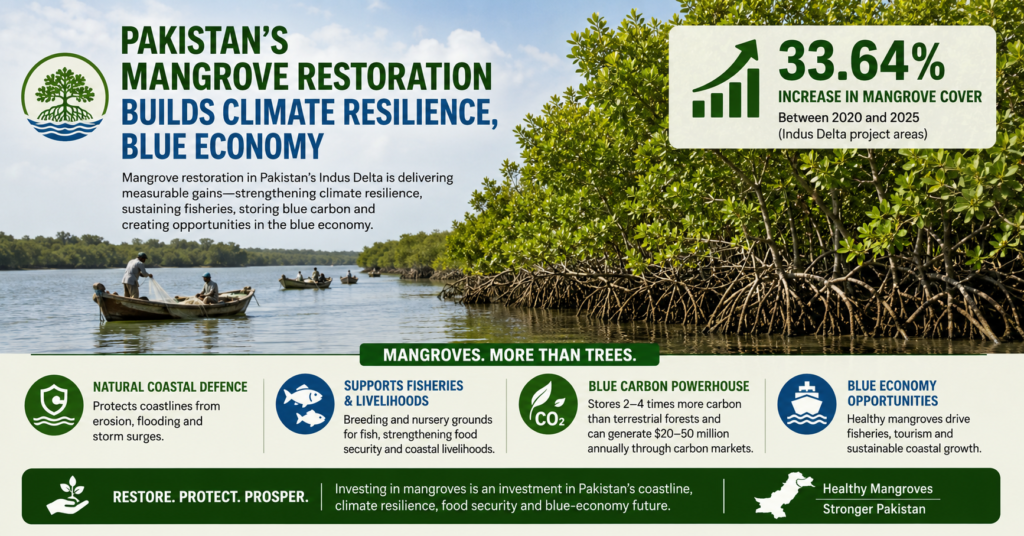
The Indus Delta offers one of the clearest examples of how ecosystem restoration can produce measurable results when ecological recovery is linked with community resilience.
On World Mangrove Day, WWF-Pakistan highlighted the recovery of mangrove landscapes in the delta, stressing that successful restoration involves more than planting trees. Its nature-based solutions approach combines area-based management, community stewardship, mangrove restoration, sustainable fisheries, freshwater security and science-based monitoring.
GIS analysis of project areas supported by Germany’s Federal Ministry for Economic Cooperation and Development (BMZ) across eight clusters recorded an overall 33.64 per cent increase in mangrove cover between 2020 and 2025, according to WWF-Pakistan.
The findings suggest that restoration is more likely to endure when ecological recovery is accompanied by community participation and measures to strengthen local livelihoods.
Beyond planting treesPakistan’s mangrove challenge is consequently shifting from simply increasing the number of trees to maintaining healthy and functioning coastal ecosystems.
That requires tackling the underlying causes of degradation, including encroachment, pollution and reduced freshwater flows, while ensuring that coastal communities have a meaningful role in conservation and can benefit from sustainable fisheries and other blue-economy activities.
The potential gains are substantial. Healthier mangrove forests can strengthen protection for coastal settlements and infrastructure, support fisheries and biodiversity, increase carbon storage and potentially generate climate-finance revenues.
An investment in resilience
Pakistan’s mangrove restoration experience illustrates a broader climate lesson: environmental protection and economic development do not necessarily have to compete.
When mangrove restoration is combined with sustainable fisheries, community stewardship, freshwater management and responsible carbon-market development, conservation can become both a climate-resilience measure and an economic strategy.
For Pakistan, the Indus Delta and other coastal mangrove areas are valuable natural assets. Protecting and restoring them could help build a more resilient coastline while creating opportunities within the blue economy.
The priority now is to turn restoration commitments into sustained action — protecting existing mangroves, expanding successful rehabilitation programmes, strengthening coastal governance and ensuring that the benefits of healthy ecosystems reach the communities that depend on them.
Mangrove restoration, in this sense, is not merely an environmental project. It is an investment in Pakistan’s coastline, climate resilience, food security and blue-economy future.