Indigenous Groups Seek Recognition of Their Role in Biodiversity Conservation
Islamabad, Oct 22: Indigenous organisations are seeking formal recognition of their contributions to biodiversity conservation through a framework that acknowledges their territorial rights, governance systems and traditional knowledge.
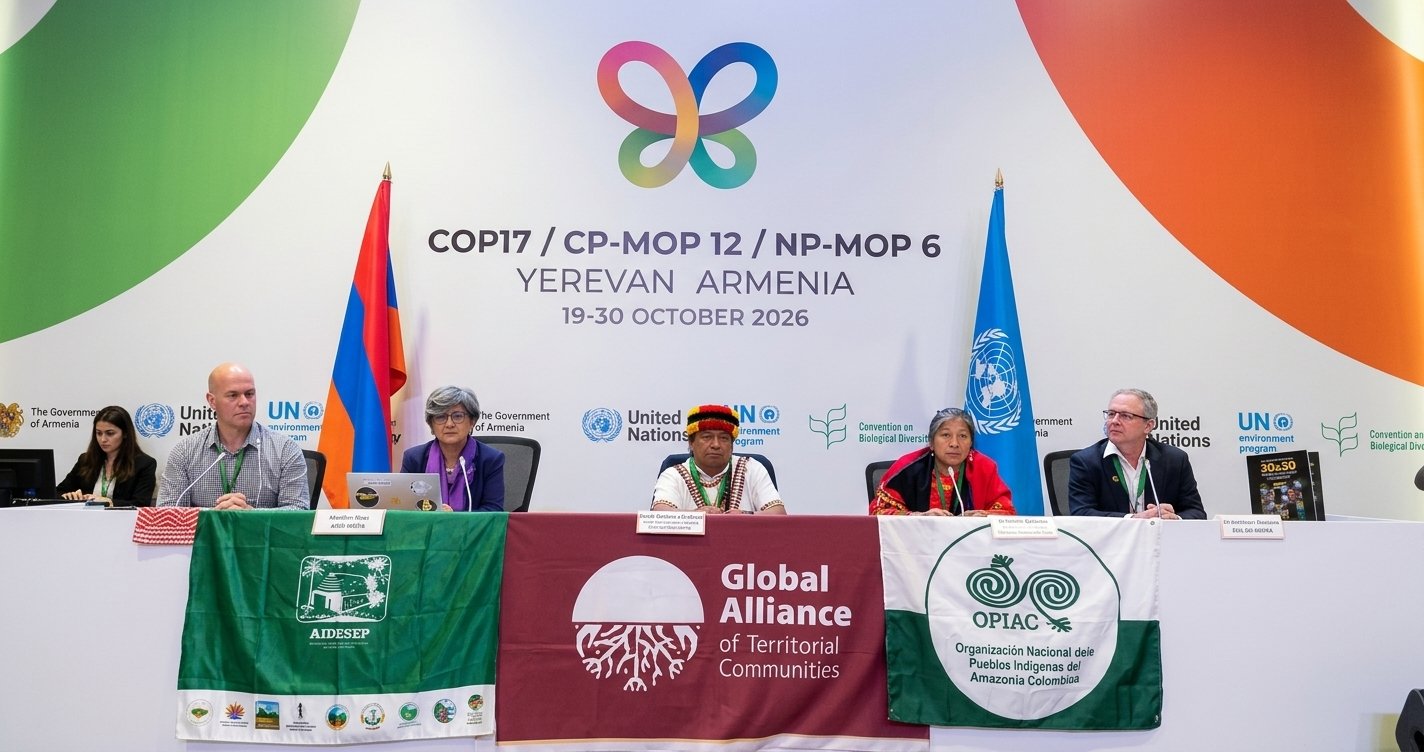
The proposal was presented on Thursday at a side event of the 17th Conference of the Parties to the Convention on Biological Diversity (COP17), at the Indigenous Peoples and Local Communities Pavilion in the Action Zone in Yerevan, Armenia.
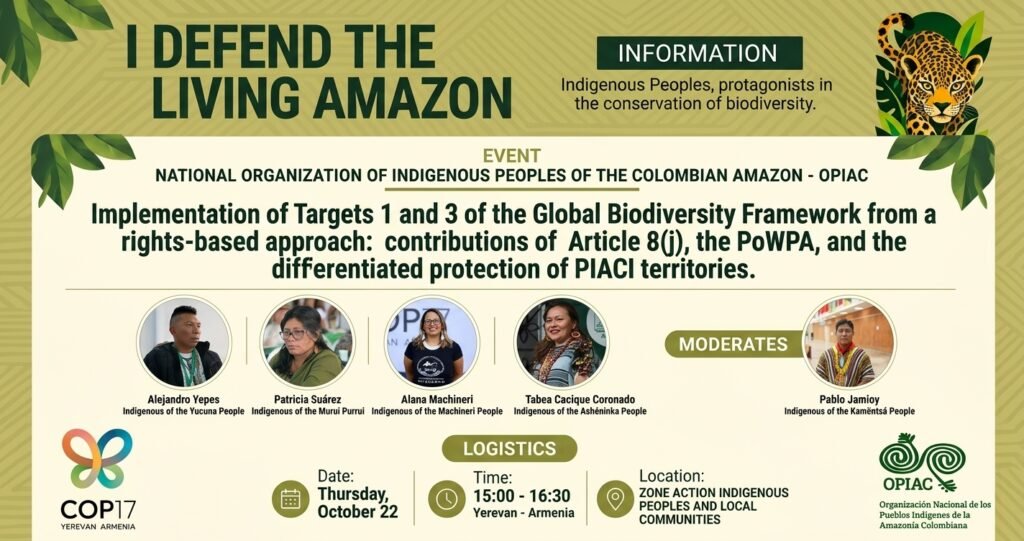
Organised by OPIAC, the event focused on implementing Targets 1 and 3 of the Kunming-Montreal Global Biodiversity Framework (KMGBF). Discussions also covered Article 8(j), the Programme of Work on Protected Areas (PoWPA) and the specific protection needs of territories inhabited by Indigenous Peoples in Voluntary Isolation and Initial Contact (PIACI).
In a phone interview with ClimateDataBook, Tabea Casique Coronado said AIDESEP, which represents Indigenous peoples in Peru, was leading an initiative to develop a roadmap for identifying and recognising territories conserved by Indigenous communities.
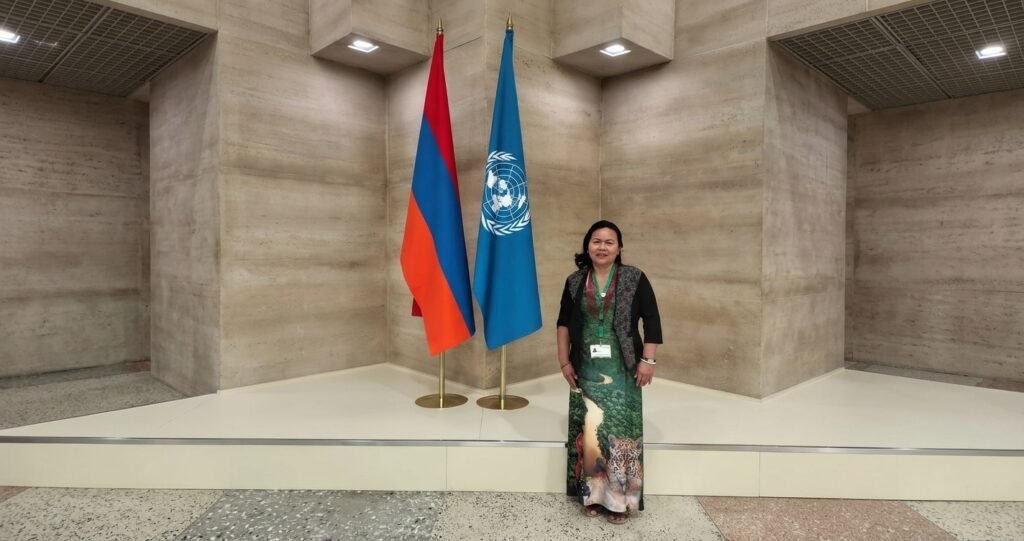
The initiative aims to document Indigenous conservation models, establish a distinct record of their contributions and improve access to direct financing.“Without territory, there is no conservation,” Tabea said, describing the principle underpinning the proposal, which emphasises the ecological, cultural and social value of Indigenous territories.
The proposed roadmap sets out three criteria for assessing conserved Indigenous territories. The first concerns territorial recognition and Indigenous governance, including communities’ ability to exercise self-governance, address threats and protect their lands. The second assesses territorial management and the protection of forests, rivers, lakes, wildlife and plant life.
The third recognises traditional, spiritual and social values, including Indigenous knowledge, cultural practices and Buen Vivir, or “Good Living”, as foundations of conservation.The framework adopts a rights-based approach that recognises Indigenous peoples’ own systems of governance, resource use and conservation.
It also proposes that Indigenous-conserved territories be reported separately from formally designated protected areas and Other Effective Area-based Conservation Measures (OECMs). To test the criteria, AIDESEP has launched pilot assessments to document conserved territories, identify existing strengths and determine where communities may need additional support.
The process involves consultation with communities, selection of assessment areas, training Indigenous facilitators and applying a self-assessment matrix. The findings are then compiled and shared with participating communities. According to Tabea, pilot assessments have begun with Indigenous organisations affiliated with FENAMAD, ORAU, CORPIAA and CORPI-SL.
Read More: Indigenous Leaders Urge Recognition of Traditional Territories at COP17
In Peru’s Madre de Dios region, seven communities have completed assessments, allowing residents to evaluate their conservation practices and identify areas for improvement. Community authorities, elders, young people and women have participated in the exercise, although organisers acknowledge that broader participation is needed. The communities have also documented their territorial management and conservation activities.
Read More: COP17 Highlights Nature-Positive Cities, Public Participation in Biosafety
Preliminary results show that Tipishca Native Community recorded 90.5 per cent affirmative responses in its self-assessment, compared with 85.7 per cent for La Victoria Native Community. The scores suggest that both communities may meet the conditions for preliminary consideration as conserved Indigenous territories, but do not constitute official recognition.
AIDESEP has called for the exercise to be expanded to reflect the diversity of Indigenous territories and governance arrangements. Assessments are still pending in areas represented by five regional organisations: ARPI-SC, CODEPISAM, COMARU, ORPIAN-P and ORPIO. The initiative is supported by AIDESEP, its nine regional organisations, 15 Autonomous Territorial Governments and conservation partners, including COICA, WWF, WCS, TNC, Re, CLUA, DAR and RRI.
Read More: Indigenous Leaders Urge Recognition of Traditional Territories at COP17
It also involves cooperation with Peru’s environment ministry (MINAM) and the Peru Group of Indigenous Peoples.The roadmap builds on work initiated at a national meeting in Lima in September 2025. Its development has involved consensus-based approval, participatory information gathering and exchanges with the National Agrarian Confederation (CNA) of Peru.
The initiative seeks to establish a systematic basis for recognising Indigenous-led conservation and ensuring that Indigenous peoples’ rights and knowledge are better reflected in biodiversity policies and conservation frameworks, Tabea said.