Margalla Hills Shield Islamabad From Climate Change, Extreme Heat
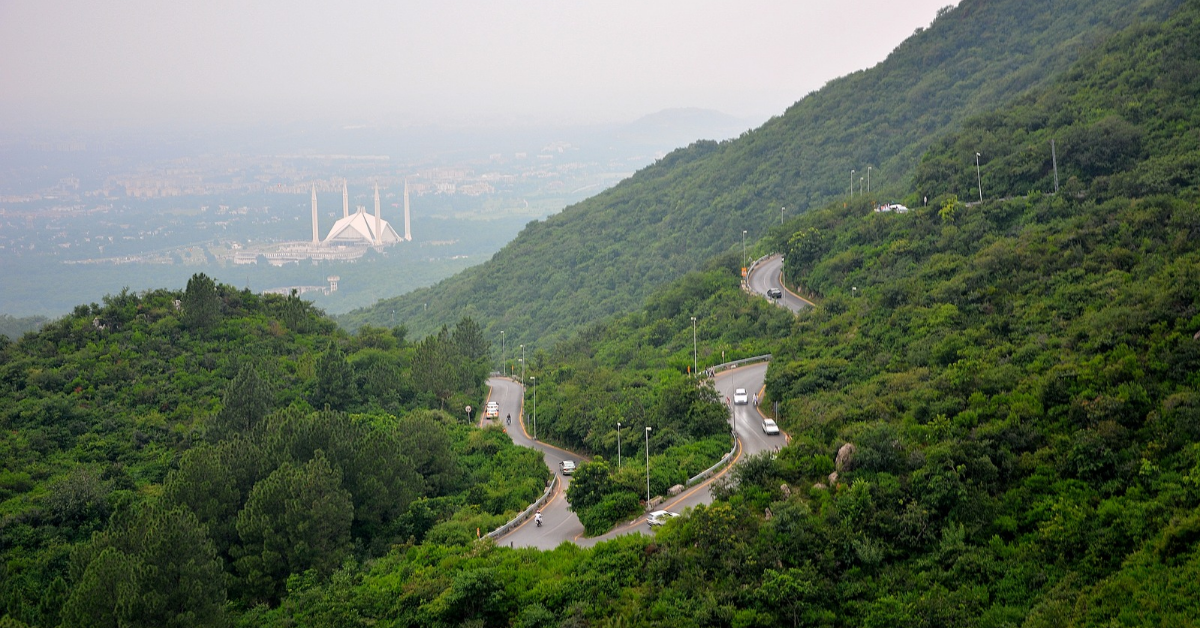
As dawn breaks over the Margalla Hills, golden light spills across forested slopes that have long defined Islamabad’s skyline. Beneath towering pines, barbets, bulbuls, and laughing thrushes fill the morning air with birdsong, while beyond the hills, the city’s expanding roads and concrete neighborhoods awaken to the familiar rhythm of traffic.
Read More: Climate change Pushes Early Bird Migration to Margalla Hills
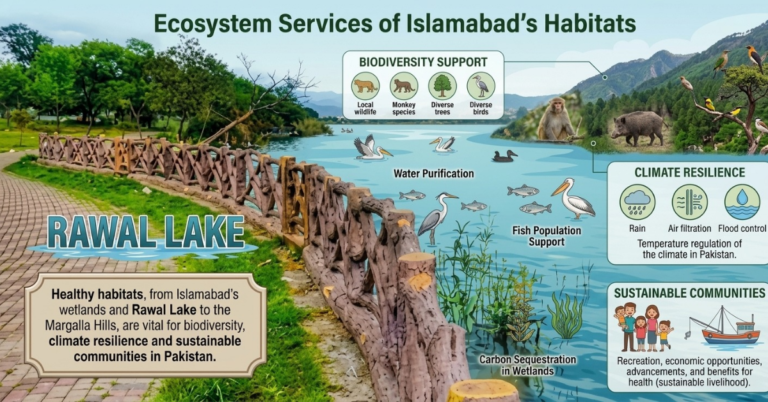
More than a scenic backdrop, these ancient forests are Islamabad’s first line of defense against climate change. They absorb carbon, cool the capital, recharge groundwater, and shelter one of Pakistan’s richest concentrations of biodiversity.
Yet the very ecosystem that protects the city is itself under mounting pressure from rising temperatures, wildfires, and human activity.Nature’s Climate InfrastructureEstablished in 1980, Margalla Hills National Park covers about 17,386 hectares at the foothills of the Himalayas, linking mountain and plain ecosystems.
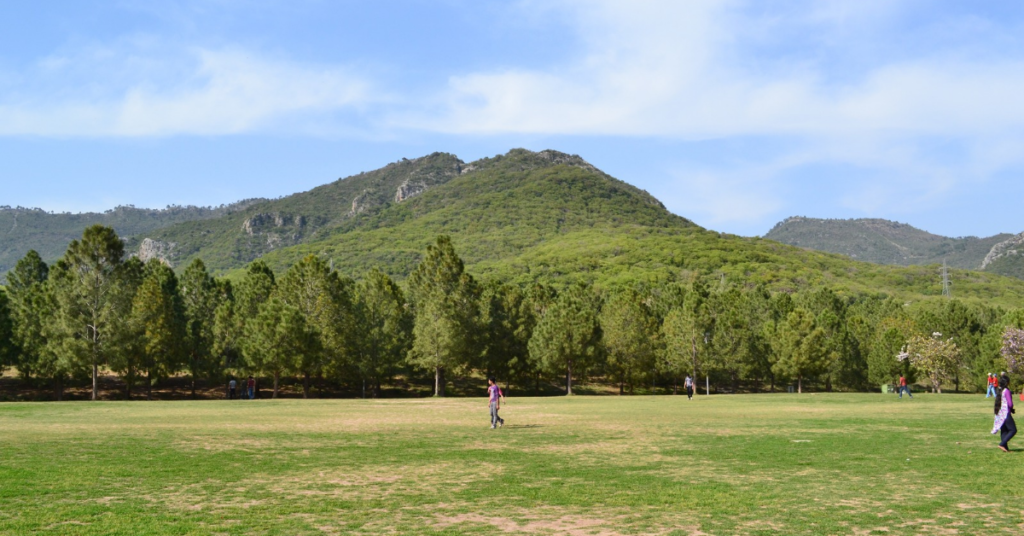
Its forests store an average of 129 MgC of carbon per hectare, regulate local temperatures, reduce soil erosion, and replenish groundwater.A 2018 study estimates that land-use changes between 1990 and 2017 released nearly 154 GgC (gigagrams of carbon) from the park, illustrating how forest degradation weakens climate mitigation efforts.
Furthermore, an IPCC 2022 study indicates that urban areas can be 3–5°C warmer than surrounding landscapes due to shrinking green cover. The Margalla Hills therefore play a vital role in limiting Islamabad’s urban heat island effect while reducing runoff, stabilizing slopes, and lowering the risks of flash floods and landslides during increasingly erratic weather.
Biodiversity Under Stress
According to the Islamabad Wildlife Management Board (IWMB) and recent official assessments, Margalla Hills National Park contains around 350 plant species and about 300 bird species.
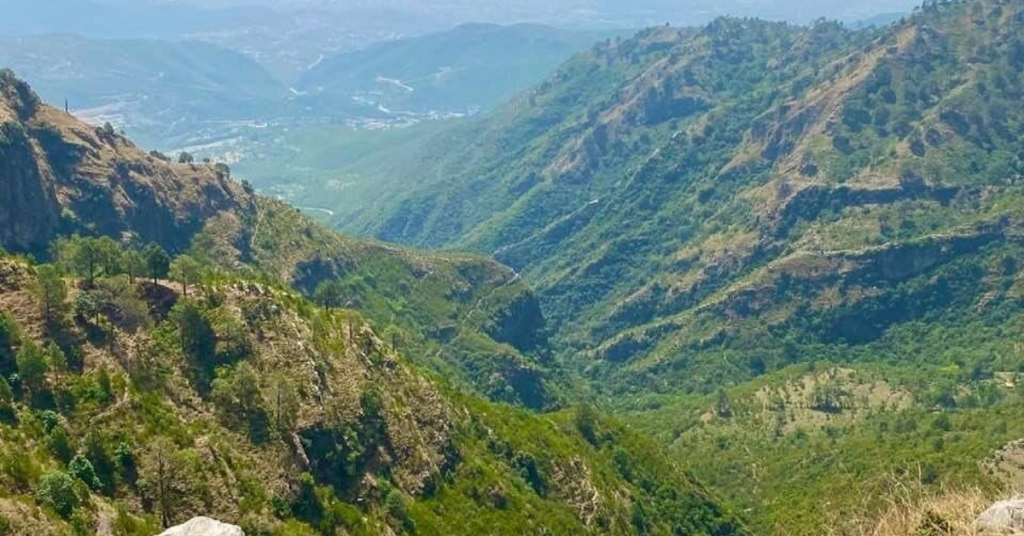
In 2022, authorities established an Asian Leopard Preservation Zone on Trail 6, restricting public access to guided visits to safeguard the species.However, climate change is disrupting this fragile ecosystem.
Rising temperatures, prolonged dry spells, and declining water availability are placing forests and wildlife under increasing stress, while altered flowering seasons and migration patterns threaten ecological balance.
“In the last one or two years, most of the cases we have received involve birds that are dehydrated and suffering from heat stress,” says Zaheer Ahmed, a wildlife officer at the Margalla Rescue Centre. During summer, the center receives up to 30 calls a day about distressed wildlife. Climate pressures are compounded by growing human activity.
According to the IWMB, nearly 900,000 visitors use the park’s designated hiking trails every year, excluding traffic through Daman-e-Koh. With only 26 wildlife rangers responsible for protecting the vast park, overcrowding, littering, off-trail hiking, and noise pollution have become persistent conservation challenges.
Plastic waste contaminates streams and habitats, while trampling damages vegetation and accelerates soil erosion. Weekly clean-up campaigns remove around 25 kilograms of litter from popular trails, but conservationists say the problem persists.
Growing Threat of Wildfires
Wildfires have become one of the clearest signs of climate change in the Margalla Hills. Hotter summers, prolonged droughts, lower humidity, and strong winds have made forests increasingly vulnerable to fire.The danger was starkly illustrated in May 2025, when more than 20 fires erupted across the hills within two weeks.
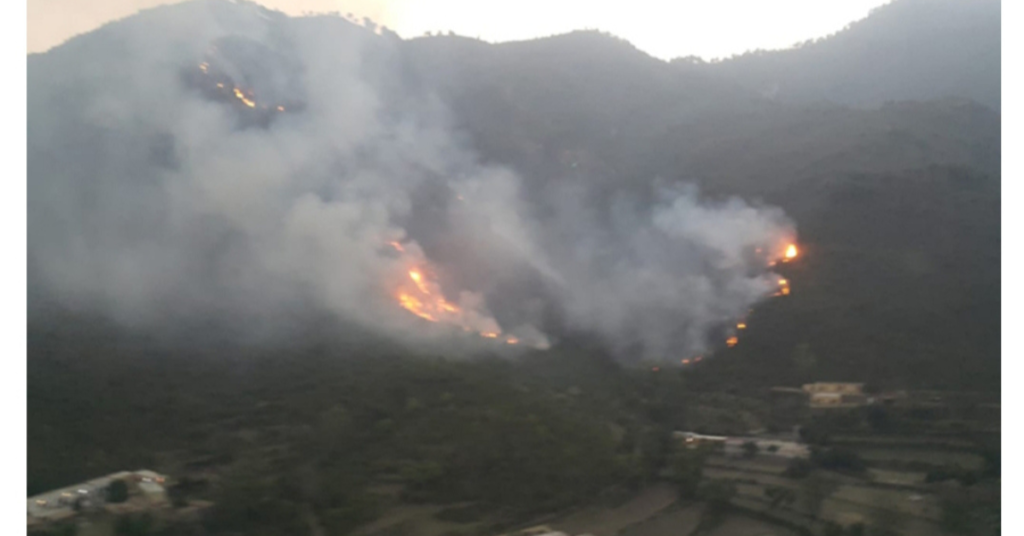
A blaze near Saidpur Darra spread rapidly despite initial containment efforts, requiring more than 70 firefighters, while another in Loi Dundee consumed a three-kilometer stretch of forest before around 150 personnel from the Capital Development Authority (CDA) and the Ministry of Climate Change brought it under control.The following year brought little relief.
Fires broke out again in the Golra and Bhara Kahu ranges on May 29, 2026, drawing more than 120 emergency responders, while another incident in February required coordinated action by the CDA fire brigade and district administration.
Beyond destroying forests, wildfires release stored carbon back into the atmosphere, degrade soils, and wipe out wildlife habitats. To reduce risks, authorities have repeatedly imposed Section 144, banning bonfires and barbecues, while urging visitors not to discard cigarette butts, glass bottles, or other combustible waste.
Green Shield Protection
Conservation efforts have expanded in recent years through habitat restoration, anti-poaching operations, biodiversity monitoring, wildlife rescue, and environmental education led by the IWMB in collaboration with government agencies, universities, NGOs, and community volunteers.
Read More: Margalla Hills Hosts Wildlife Conservation, Climate Action Drive
Tree plantation campaigns, citizen-led clean-up drives, guided nature walks, and school awareness programs are encouraging greater public participation in protecting the park.During the 2025 spring plantation campaign, former IWMB Chairperson Ayesha Humera Chaudhry stated, “Trees are the backbone of our ecosystem, and their conservation is crucial for protecting the environment from pollution.
The plantation campaign was expanded on a large scale, engaging communities and promoting sustainable practices.”
A Scenic Landscape
As the sun rises each morning over the Margalla Hills, it illuminates more than a beautiful landscape. It reveals an ecosystem that quietly protects Islamabad from intensifying heat, secures its water resources, and sustains wildlife that has flourished here for centuries.Yet that natural shield is becoming increasingly fragile.
Read More: Pakistan Eyes Nairobi Model to Revamp Margalla Hills National Park
Climate change is fueling hotter summers and more destructive wildfires, while unchecked visitor pressure continues to erode habitats that took generations to evolve.
The future of the Margalla Hills will depend on stronger fire prevention, responsible tourism, effective law enforcement, and sustained public participation.
Protecting these forests is no longer simply about preserving Islamabad’s scenic beauty, it is about safeguarding the capital’s climate resilience, biodiversity, and quality of life before its green shield disappears.