Junaid Calls for Aligning Education with Pakistan’s Blue Economy Needs
Islamabad, Nov. 2: Federal Minister for Maritime Affairs Muhammad Junaid Anwar Chaudhry has called for aligning educational policies with the needs of the blue economy to develop a skilled workforce and promote sustainable economic growth.
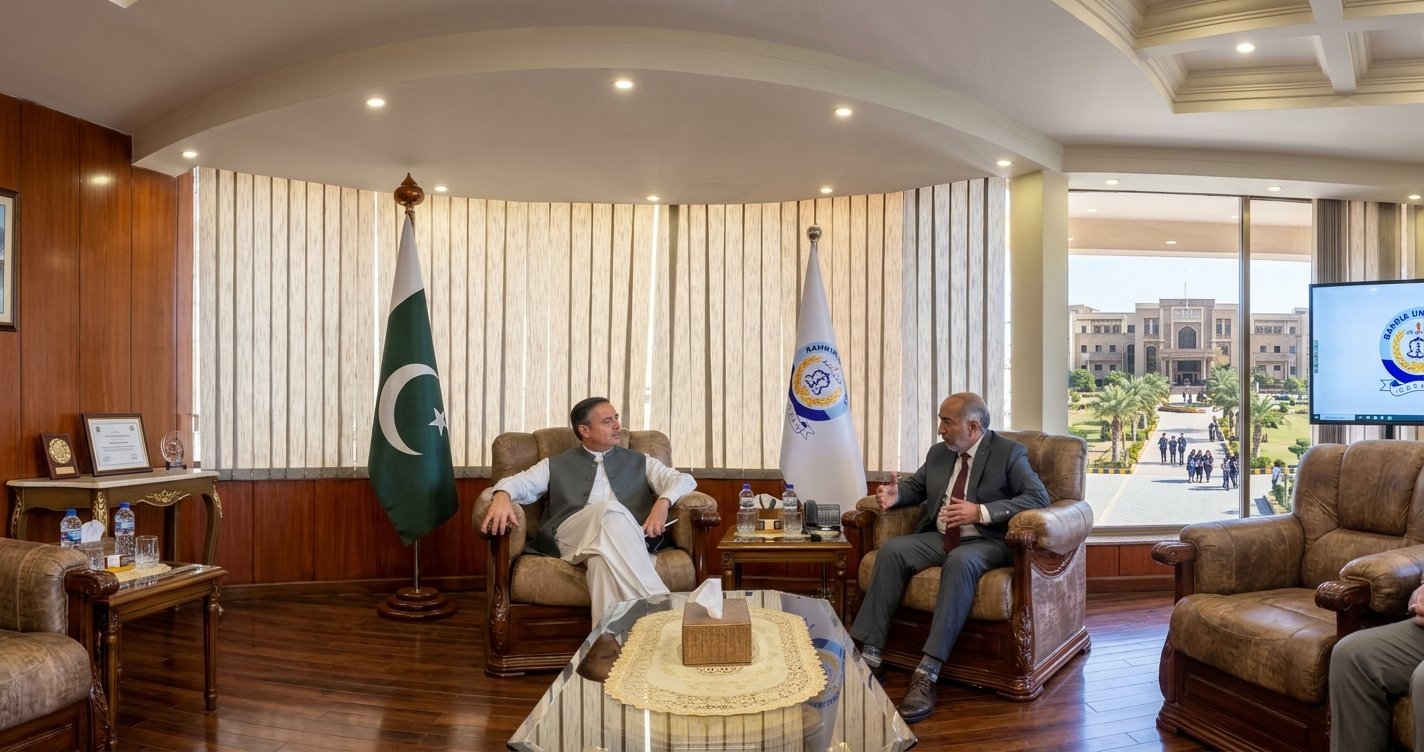
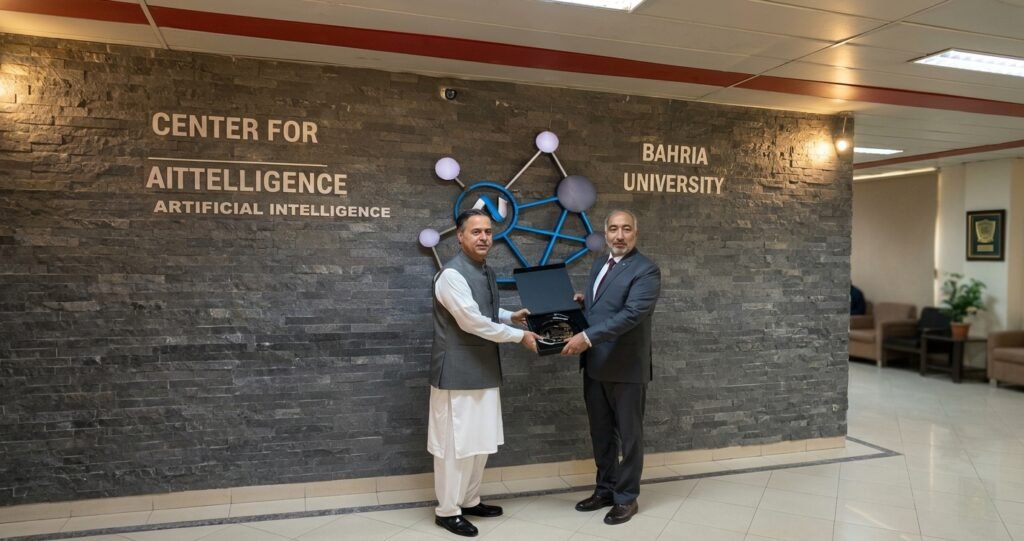
He expressed these views during a meeting with Bahria University Rector Vice Admiral (retd) Engr Abid Hameed, where they discussed academic cooperation to expand maritime education, strengthen professional skills and improve access to higher education.
The minister said collaboration between the Pakistan Marine Academy (PMA) and Bahria University could help address the shortage of skilled human resources through specialised academic programmes, professional training, research and capacity-building initiatives.
Read More: Federal, Provincial Leaders Push Ocean Sustainability, Marine Action
He informed the rector that the process of granting degree-awarding status to PMA had reached its final stage. The proposed upgrade aims to strengthen professional maritime education and bring academic qualifications in the sector closer to international standards.
Identifying key challenges to the development of Pakistan’s blue economy, the minister cited a shortage of skilled workers, weak institutional coordination and a lack of specialised educational programmes.
The meeting also discussed facilitating higher education for deserving students from coastal areas through the proposed Maritime Educational Endowment Fund (MEEF), particularly in maritime-related disciplines.
The fund is envisaged as a long-term financing mechanism for the maritime sector, with projections of building a scholarship corpus of Rs25 billion over 10 years and cumulative disbursements of around Rs12 billion to benefit approximately 65,000 students from all over the country.
Read More: Pakistan’s Marine Protected Areas Boost Blue Economy, Climate Resilience
Junaid Chaudhry said the initiative could help students from financially disadvantaged coastal and fishing communities access quality education and benefit from emerging employment opportunities in the maritime sector.
He said maritime education was increasingly important given Pakistan’s potential in shipping, port operations, fisheries, marine tourism, offshore energy and other ocean-based industries.
Read More: Data-driven ocean governance
Referring to a 2024 study on the ocean economy, the minister said the sector contributed an estimated 0.4 per cent to Pakistan’s gross domestic product (GDP). He identified inadequate infrastructure, outdated regulations, unsustainable fishing practices and marine pollution as major constraints on its growth.
The minister said the proposed academic partnership also supported the objectives of the United Nations Decade of Ocean Science for Sustainable Development (2021–2030), which promotes ocean research, scientific cooperation and knowledge-sharing for the sustainable management of marine resources.
Read More: Pakistan Maritime Minister Calls for Ocean Literacy to Boost Climate Resilience
Bahria University Rector Vice Admiral (retd) Engr Abid Hameed expressed the university’s readiness to collaborate with PMA in promoting maritime education, research and knowledge-sharing.
RThe minister said the partnership was also aligned with the United Nations Sustainable Development Goals, particularly SDG 4 (quality education), SDG 8 (decent work and economic growth) and SDG 14 (life below water), which promotes the sustainable use of marine resources and protection of coastal ecosystems.
Read More: Junaid Anwar calls for integrating ocean awareness into national education
The meeting underscored the importance of stronger links between higher education institutions and the maritime industry to equip young people, particularly those from coastal communities, with skills needed to benefit from emerging opportunities in the blue economy.