Musadik Malik Calls Climate Change A ‘Tax’ On Vulnerable Communities
Islamabad, Nov 2: Federal Minister for Climate Change Dr Musadik Malik on Monday described climate change as a “tax” on poor and vulnerable communities, saying they bear its costs through physical suffering, lost livelihoods and exposure to extreme weather.
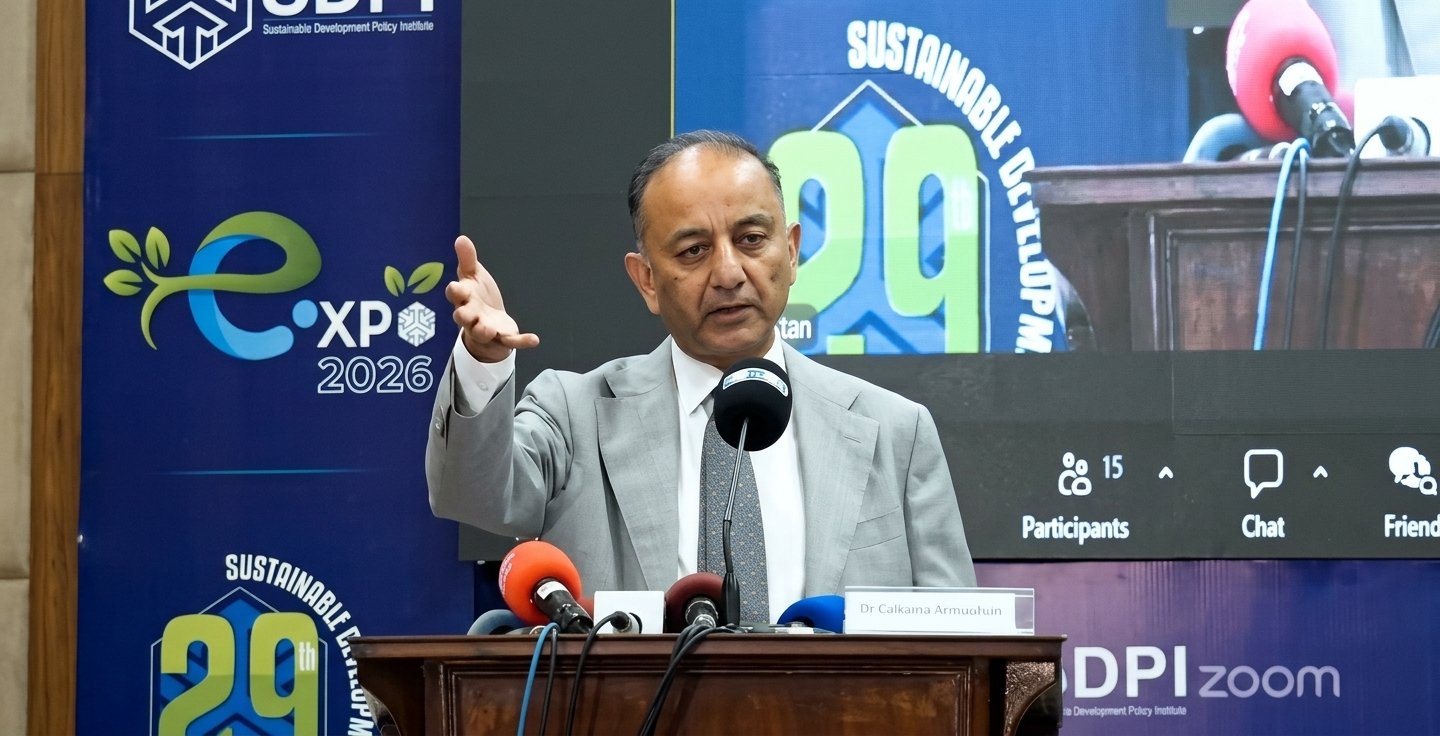
Addressing the inaugural plenary of the 29th Sustainable Development Conference (SDC 2026), organised by the Sustainable Development Policy Institute (SDPI), he called for a shift towards rights-based and climate-resilient development, arguing that progress should be measured by its impact on people’s lives and future generations rather than financial indicators alone.
Read More: Climate-Vulnerable Nations Advance $500m Lifeline Fund
“For the poor, development is measured in generations, not dollars,” he said, questioning a development model in which communities repeatedly lose their homes, livelihoods and assets to natural disasters.
Speaking under the theme “Rethinking Development in an Age of Disruption”, Dr Malik said the conventional development pathway, from agriculture to industrialisation and eventually services, was becoming increasingly difficult to follow amid changing global economic and climate conditions.
He highlighted the growing constraints on development financing, saying resources available for development had declined by 23 per cent in a year. He also pointed to disparities in borrowing costs, with wealthy countries paying an average interest rate of around 2.2 per cent compared with 5.2 per cent for developing countries.
Read More: Margalla Hills Hosts Wildlife Conservation, Climate Action Drive
Citing global debt pressures, he said about 3.7 billion people lived in countries where debt servicing exceeded combined expenditure on education and healthcare, leaving governments with fewer resources for essential public services.
He questioned how developing countries could achieve their development targets when substantial resources were diverted towards interest payments rather than education and healthcare, with consequences for maternal and infant health and school enrolment.
Turning to the human cost of climate change, the minister said vulnerable populations were effectively paying a “climate tax” through lost livelihoods and physical hardship.
Read More: Pakistan, UN Agree to Boost Climate Resilience, Disaster Preparedness
Citing the example of Gulab Rohi, a brick-kiln worker in Jacobabad, he said the worker continued working in extreme heat because stopping work would leave his children without food.“This is not merely weather or climate; it is a tax that a poor person pays through his body,” he said.
Dr Malik said developing countries were bearing the consequences of emissions they had not produced while having little influence over the economic and financial decisions shaping their development prospects. He said these challenges should be viewed as questions of rights and justice rather than simply indicators of underdevelopment.
Read More: Musadik Malik Links Climate Change, Transboundary Water Control to Global Injustice
Outlining the need to rethink Pakistan’s development priorities, he raised three questions: whether development projects could withstand future floods, who would bear the costs of destruction and who would own the benefits of development.
He said climate resilience should go beyond rebuilding communities after disasters, requiring development planning to ensure that homes and infrastructure were located in safer areas and protected against recurring climate risks.
Identifying key priorities for Pakistan, the minister called for better measurement and prevention of climate-related losses, measures to address extreme heat, and greater local ownership through research, innovation and investment in young people.
Read More: Climate change Pushes Early Bird Migration to Margalla Hills
He said locally developed solutions, including shading, cooling systems and indigenous technologies, could protect vulnerable communities while creating economic opportunities.
Virtual Green University, Green Cloud initiatives
The minister also outlined government plans to strengthen climate research and technological innovation, including a proposed Virtual Green University to connect Pakistani universities with international research institutions.
He said institutions such as Allama Iqbal Open University, the National University of Sciences and Technology (NUST), Lahore University of Management Sciences (LUMS), Aga Khan University and Karakoram International University could collaborate on research into glaciers, climate change and mountain ecosystems.
Read More: SDPI Urges Gender Responsive Budgeting in Climate Adaptation Policies
The initiative would facilitate student and faculty exchanges and joint research projects. He also cited cooperation with Italy and the United Kingdom, including the Green Compact, as opportunities for international research partnerships.
Dr Malik also announced a proposed Green Cloud initiative to make technological resources developed through public funding freely accessible to young people, enabling them to experiment and develop practical solutions.
He said the government had established a $10 million Green Field Fund to support startups and young innovators working on science, technology and climate-related solutions.
A board had been constituted, while the fund’s first competition was expected within three months.The initiative, he said, had received support from international development partners, including UNICEF, the United Nations Development Programme (UNDP), the World Bank, the Asian Development Bank and GIZ.
Read More: Pakistan Among Most Climate-Vulnerable Countries Despite Low Emissions: Yousaf Raza
Emphasising investment rather than conventional lending, he said young innovators should be provided with the resources and opportunities to translate their ideas into practical solutions.
Dr Malik said Pakistan’s development strategy must place sustainability, climate justice, research and local ownership at its centre to ensure that economic progress benefited vulnerable communities and future generations.